
Reviewed · HISTORICAL TOURS
Historic Walking Tour of Glebe
Glebe’s story is written in its buildings. In one short walk, you move from a soaring Gothic church to sandstone Presbyterian architecture, Catholic stained glass, grand mansions, and a former children’s detention centre. It is a compact look at how religion, industry, wealth, and social welfare helped shape inner Sydney.
I like the tour’s six focused stops and its Saturday morning timing. I also like the personal feel suggested by guide Ned, whose storytelling helped one longtime Glebe resident see the suburb in a new way. The main consideration is the short one-hour length: you’ll see a lot, but this is an overview rather than a slow architectural study.
In This Review
- Key points at a glance
- Why Glebe makes such a good walking subject
- Start at 10:00 am on Glebe Point Road
- St John’s Anglican Church at 138A Glebe Point Road
- Glebe Presbyterian Church and its nomadic past
- St James’ Catholic Church at 2 Woolley Street
- Bidura House at 357 Glebe Point Road
- Hartford House at 244 Glebe Point Road
- Toxteth Park House and the finish at St Scholastica’s College
- What $28.69 gets you
- Who will get the most from this walk
- Practical details before you book
- Should you book the Historic Walking Tour of Glebe?
- FAQ
- How long is the Historic Walking Tour of Glebe?
- What time and day does the tour operate?
- Where does the tour start and finish?
- What buildings are included?
- Is the tour suitable for pets and service animals?
- Can I cancel for a refund?
Key points at a glance
- Six heritage stops in one hour: Churches, mansions, and institutional buildings give the walk a broad social focus.
- Guide Ned’s local storytelling: The tour is built around unusual stories, not just dates and architectural labels.
- A strong mix of architecture: Gothic Revival, sandstone, Victorian mansion design, and stained glass all appear.
- Saturday at 10:00 am: The morning schedule works well before exploring Glebe Point Road on your own.
- Small price, short commitment: At $28.69 per person, the tour costs little but covers only about an hour.
- Easy-going policies: Mobile tickets, public transport nearby, pet access, and free cancellation up to 24 hours before departure make planning simple.
Why Glebe makes such a good walking subject
Glebe is close to central Sydney, yet its streets tell a different story from the city’s grand civic core. The suburb grew through a mix of industry, churches, working communities, and wealthy families who built substantial homes. That combination gives the walk more range than a simple mansion tour.
You are not looking at one neat period of development. Glebe brings together Edwardian townhouses, Victorian mansions, sandstone churches, and properties that later served very different purposes. The result is a suburb where architecture can reveal changing ideas about status, religion, family life, and government care.
I find that kind of tour more useful than a walk that simply points out pretty façades. A house may tell you about its original owner, but a building’s later use can tell you even more about Sydney. Bidura House is a good example. It began as a gentleman’s residence and later became a major children’s detention centre.
The route also gives you a chance to see how close these different stories sit to one another. The six stops are all within Glebe, with the start at 140 Glebe Point Road and the finish outside St Scholastica’s College at 15 Avenue Road. The supplied timing allows about ten minutes at each stop, so expect a brisk, tightly organized walk.
More walking tours in Sydney:
- Sydney Opera House Official Guided Walking Tour
★ 4.5 · 3,770 reviews - Sydney The Rocks Guided Walking Tour
★ 5.0 · 1,546 reviews - Sydney: The Rocks 90-Minute History Walking Tour
★ 4.7 · 1,092 reviews
Start at 10:00 am on Glebe Point Road
The tour begins at 140 Glebe Point Road at 10:00 am on Saturday morning. Public transportation is nearby, which matters in an inner-city suburb where driving and parking can add needless trouble. You receive a mobile ticket, so there is no need to print anything.
The group can contain up to 30 people. That is not an especially tiny group, so your experience may depend partly on where you stand and how clearly you can hear. The one-hour format should help keep the pace moving, but it also means you should arrive ready to walk rather than expecting long pauses.
Guide Ned is the named personality connected with this experience. The strongest praise centers on how much history he can pack into a short period, including for someone who had lived in Glebe for 15 years. That gives you a useful clue about the style: expect stories and local context, not only a list of construction dates.
Because the tour operates on Saturday mornings, you can easily continue along Glebe Point Road afterward. Coffee and tea are not included, so plan to buy your own drink before or after the walk. The morning start leaves the rest of the day free for markets, cafés, museums, or more independent exploring, though those extras are outside the tour.
St John’s Anglican Church at 138A Glebe Point Road
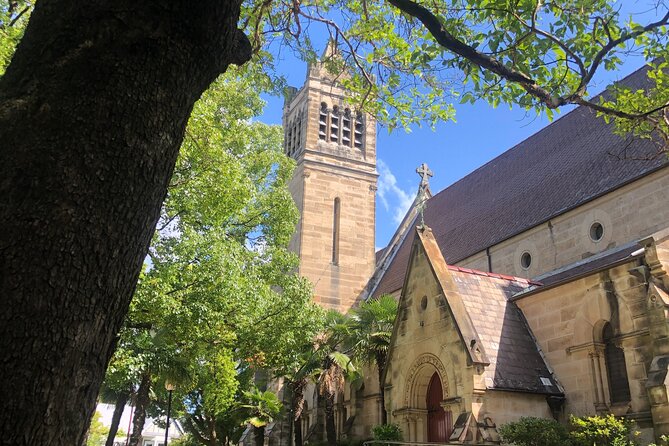
The first stop is St John’s Anglican Church, a large Gothic Revival building with a towering spire and substantial grounds. It dominates the nearby streetscape, making it an easy building to appreciate even before the guide explains its background.
Gothic Revival architecture often aims for height, drama, and a strong sense of ceremony. Here, the spire does much of that work. You get an immediate visual lesson in how churches could shape a suburb’s identity, not just serve as places of worship.
The church’s grounds add to the stop. Ten minutes is enough to take in the scale, architectural outline, and historical setting, but not enough for a detailed examination of every feature. The admission is listed as free, though you should not assume the tour includes a full interior visit unless the guide confirms it on the day.
I like starting here because it sets the tone. Glebe is not introduced as a collection of attractive old houses. You begin with a major institution that helped give the suburb a public center and a recognizable profile.
Glebe Presbyterian Church and its nomadic past
At 158 Bridge Road, Glebe Presbyterian Church offers a different architectural mood. This is a commanding sandstone building, with a solid, grounded appearance that contrasts neatly with the pointed vertical lines of St John’s.
The unusual part is the church’s nomadic life. That phrase points to a building with a history of movement and changing circumstances, rather than a simple story of one congregation occupying one site forever. It is exactly the kind of detail that can make a short tour memorable.
Ten minutes here should give you time to compare the church with the first stop. Look at the materials and overall shape, then listen for the social story behind the building. Sandstone churches can look permanent, but their communities and uses may change considerably over time.
This stop is also a reminder that heritage is not only about age. A building becomes interesting because of what happened to it, who used it, and how it adapted. The church’s changing life gives the walk a useful human angle.
More history walks near Sydney:
- Sydney The Rocks Historical Pub Tour
★ 5.0 · 251 reviews - Sydney Convicts, History & The Rocks 2.5-Hour Walking Tour
★ 4.9 · 181 reviews - Historical True Crime Walking Tour of East Sydney
★ 5.0 · 53 reviews - Sydney Photography Course in the Historic Rocks Area
★ 5.0 · 35 reviews
St James’ Catholic Church at 2 Woolley Street

The third stop is St James’ Catholic Church, located within a complex containing several heritage architectural styles. That setting makes it more than a single-building photo stop. You can compare different periods and design choices in one compact area.
The church is noted for detailed stained-glass windows and an intriguing back story. Stained glass rewards a slower look, but the tour allows about ten minutes, so I would pay attention as soon as you arrive. If the light is favorable, the windows may be especially effective, though the experience naturally depends on access and conditions.
The mixed architectural setting gives the guide room to explain how religious sites can grow in stages. A complex may preserve several eras at once, showing how a community expanded or changed without erasing all that came before.
For you, the value is in the contrast. St John’s emphasizes a dramatic Gothic exterior. The Presbyterian church brings sandstone and institutional weight. St James’ adds Catholic identity, decorative glass, and a group of buildings with different architectural voices.
Bidura House at 357 Glebe Point Road
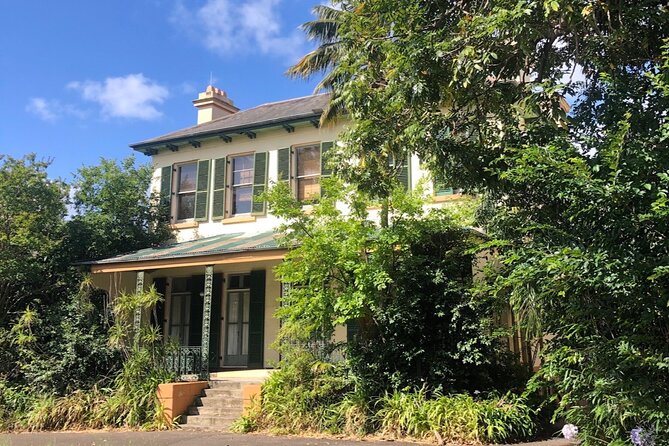
Bidura House is one of the most thought-provoking stops because its past moves from privilege to institutional care. The 1860s residence began as a gentleman’s home, suggesting the wealth and social position of its original owner. Later, the property became a large children’s detention centre.
That change gives the building a difficult edge. It is easy to admire a historic mansion from the street, but the later use forces you to think about the people and systems connected to it. A pretty façade can conceal a far more complicated past.
The tour’s social history is strongest here. You are not simply learning that the house is old. You are seeing how a property can change meaning as Sydney changes around it. The same building can represent private status in one period and government authority in another.
Allow the full ten minutes for this stop. Bidura House deserves more than a quick photograph, especially if the guide explains how its role changed. As with the other stops, the listed admission is free, but the tour information does not promise a full interior visit.
Hartford House at 244 Glebe Point Road
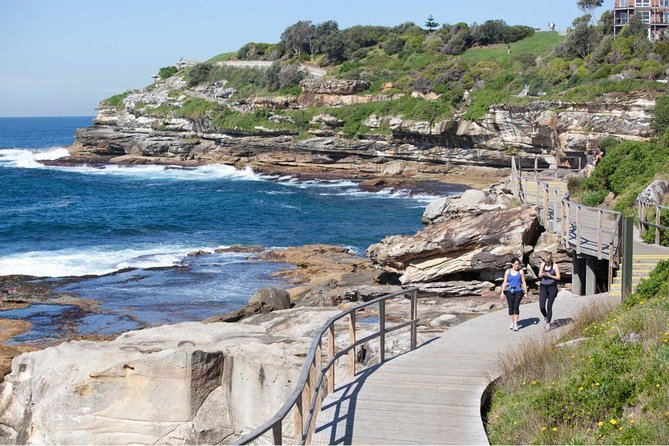
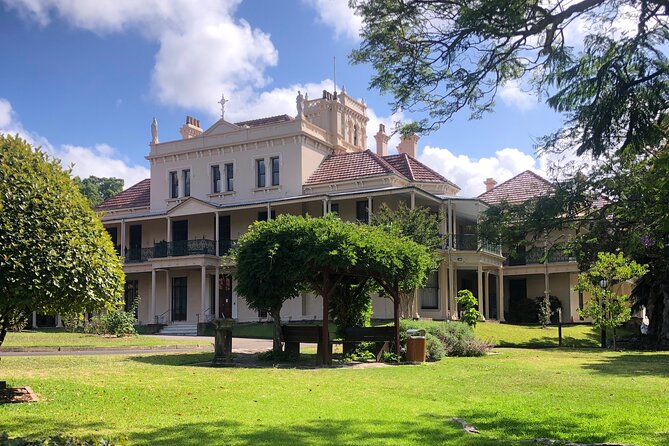
Hartford House brings you back to the world of wealthy private residences. It is an elaborate mansion and an example of one of Glebe’s most prestigious homes.
After the churches and Bidura House, Hartford helps complete the picture of social rank in the suburb. You can see how prominent families expressed status through scale, detail, and location. The building also supports the larger point that Glebe was shaped by both industry and Sydney’s wealthy elite.
A ten-minute stop is enough for an introduction, especially if the guide points out the features that make the house elaborate. It is less suited to anyone hoping for a long architectural lecture or access to every room. Think of it as one piece in a sequence, not the whole reason to book the tour.
I like having this stop before Toxteth Park House. Hartford is prestigious, but the final residence is presented as the most impressive house in Glebe. That comparison gives the route a natural finish and a sense of rising scale.
Toxteth Park House and the finish at St Scholastica’s College
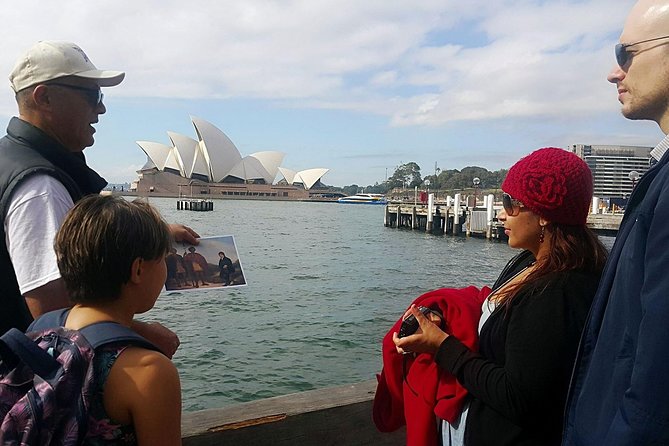
The walk ends at St Scholastica’s College, home to the former Toxteth Park House. This is described as the most impressive house in Glebe and the former mansion of one of Sydney’s wealthiest families.
The building provides a strong final stop because it gathers together several themes from the walk: private fortune, grand domestic architecture, social position, and the growth of Glebe as a desirable inner-city address. By this point, you have already seen churches serving different communities and Bidura House’s dramatic change of purpose. Toxteth Park House lets you finish with the suburb’s upper end of wealth and influence.
The tour finishes out front of the college at 15 Avenue Road. That makes the route easy to understand, but you should plan your onward route before setting out if you have a lunch booking or another timed activity. The experience lasts about one hour, yet the walk ends at a different location from the starting point.
This final stop is also where the tour’s architectural thread comes together. You have seen Gothic Revival design, sandstone construction, stained glass, and elaborate mansion architecture. The houses are not isolated curiosities. They help explain who had power in Glebe and how that power was displayed.
What $28.69 gets you
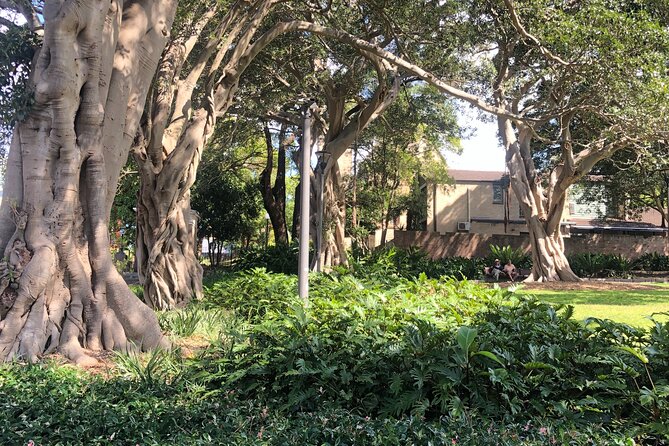
At $28.69 per person, the price is reasonable if you want a guided introduction rather than a self-guided stroll. You are paying for a focused hour of interpretation across six stops, with a guide connecting the buildings to Glebe’s social development.
The value is strongest for first-time visitors to Glebe or Sydney residents who pass through the suburb without knowing its back story. One particularly telling response came from someone who had lived in Glebe for 15 years and felt the guide covered more in a few hours than years of ordinary residence. The tour is only about an hour, so the point is clear: a well-told local story can change what you notice.
The value is less obvious if you want interior access, refreshments, or a long, leisurely walk. Admission to the listed stops is free, and coffee or tea is not provided. You are buying explanation and structure, not entry tickets.
The tour carries a five-star rating from 15 submitted ratings, with 100 percent recommending it. That is a small sample, so I would treat it as encouraging rather than final proof. Still, the praise is specific: the strongest point is the amount of local history and the quality of the stories.
Who will get the most from this walk
I would recommend this tour to you if you enjoy:
- Historic architecture with a social story behind it
- Short walks that fit easily into a Sydney weekend
- Churches, mansions, and old institutional buildings
- Local guides who explain how a suburb developed
- Exploring beyond the usual central Sydney sights
- A guided introduction before wandering independently
It suits adults, older children, and most people who can participate in a one-hour walking activity. Service animals are allowed, and pets are welcome. The experience requires good weather, so anyone with a tight schedule should keep that condition in mind.
The tour may not suit you if you need a completely private group, extensive interior visits, or a slow pace at each building. With up to 30 people and ten minutes per stop, it is designed as a lively overview.
Practical details before you book
The tour runs every weekend on Saturday mornings and starts at 10:00 am. Confirmation arrives when you book, and the mobile ticket keeps the check-in process simple.
Wear comfortable shoes. The tour is short, but it is still a walking activity with several stops and a point-to-point finish. Since the route ends at St Scholastica’s College rather than returning to Glebe Point Road, take note of the final address.
You can cancel for a full refund up to 24 hours before the start time. Changes or cancellations inside that window are not accepted for a refund. Poor weather can cause a cancellation, in which case you are offered another date or a full refund. The same applies if the minimum number of participants is not reached.
Glebe is near public transportation, which makes the tour practical without a car. Since the tour does not include coffee or tea, I would use the early start to your advantage: have breakfast beforehand, then explore Glebe Point Road after the walk.
Should you book the Historic Walking Tour of Glebe?
Book it if you want a compact, story-led introduction to one of Sydney’s most architecturally varied inner suburbs. The best reason to go is the range: six stops cover churches, mansions, wealth, religion, industry, and the uncomfortable history of child detention in only about an hour.
The tour is especially good value for Sydney residents and repeat visitors who have seen the major sights but have not taken time to understand Glebe. Guide Ned’s storytelling is a major part of the appeal, and the strong five-star response suggests the experience succeeds when local detail matters to you.
Skip it if you want a long architectural inspection, guaranteed interior access, or a full morning activity. Otherwise, $28.69 is a modest price for a focused Saturday walk that can change the way you see Glebe’s streets.
FAQ
How long is the Historic Walking Tour of Glebe?
The tour lasts approximately one hour, with about ten minutes planned at each of six stops.
What time and day does the tour operate?
It operates every weekend on Saturday mornings and begins at 10:00 am.
Where does the tour start and finish?
The tour starts at 140 Glebe Point Road, Glebe NSW 2037. It finishes outside St Scholastica’s College at 15 Avenue Road, Glebe NSW 2037.
What buildings are included?
The stops include St John’s Anglican Church, Glebe Presbyterian Church, St James’ Catholic Church, Bidura House, Hartford House, and the former Toxteth Park House at St Scholastica’s College.
Is the tour suitable for pets and service animals?
Yes. Service animals are allowed, and pets are welcome.
Can I cancel for a refund?
Yes. You can cancel up to 24 hours before the start time for a full refund. Poor weather or failure to reach the minimum number of participants can also lead to a different date or a full refund.
Just added around Sydney
- Sydney Eye Tower Admission Ticket★ 3.5 · 3 reviews
- Guided Snorkel Tour at Australias most iconic beach★ 5.0 · 3 reviews
- Uncover the Magic Gin Distillery Adventure at Millsheds Bowral★ 4.5 · 3 reviews
- Honey Farm Tour. Morning Tea. Guided Tasting★ 5.0 · 3 reviews
- Sydney Beaches Half Day Drive and Walk Tour★ 5.0 · 3 reviews
- Sunrise & Surf Beach Lifestyle Photoshoot★ 5.0 · 3 reviews
- From Sydney Blue Mountains Private Tour with Wildlife Park★ 3.5 · 3 reviews
- Small Group Tour Sydney City Highlights and Hidden Gems★ 5.0 · 3 reviews
Historical Tours, compared.

Sydney Convicts, History & The Rocks 2.5-Hour Walking Tour
Read our review →
Historical True Crime Walking Tour of East Sydney
Read our review →

Sydney Historical Walking Tour including The Rocks
Read our review →
Sydney Private Half Day Tour: Beaches, History & Icons
Read our review →
Sin and the City — Kings Cross Golden Age Walking History Tour
Read our review →Browse the lists this tour appears in