
Reviewed · WORKSHOPS
Photography Essentials Workshop in Sydney Harbour Foreshore
Sydney Harbour becomes your classroom in this hands-on photography workshop. You move from Customs House through Circular Quay and The Rocks, learning how to turn famous views into stronger photographs rather than simply collecting postcard snapshots.
I like the small maximum group of 10, which gives a tutor room to look at your camera and answer real questions. I also like the way the course links camera settings with composition and changing light, then puts those ideas to work on the street. The main catch is equipment: you need a camera with full manual capability, and a four-hour outdoor session depends on good weather.
In This Review
- Key points
- A four-hour lesson beside Sydney Harbour
- Starting at Customs House at noon
- Learning your camera before chasing the view
- Sydney Opera House: more than the standard postcard
- Harbour Bridge: lines, scale, and changing viewpoints
- Circular Quay: a practical lesson in changing scenes
- The Rocks: historic streets and closer compositions
- Teaching style and the value of a real photojournalist
- What the $107.59 price buys you
- Who will get the most from this workshop
- Practical details before you book
- Should you book the Sydney Harbour photography workshop?
- FAQ
- Where does the photography workshop start?
- What time does the experience begin?
- How long does the workshop last?
- Where does the workshop finish?
- What type of camera do I need?
- Can I cancel for a full refund?
Key points
- Manual control from the start: Learn how aperture, shutter speed, and other shooting modes help you shape an image.
- Sydney’s best photo classroom: Work around the Opera House, Harbour Bridge, Circular Quay, and The Rocks.
- Small-group teaching: The class is limited to 10 people, a useful size for personal guidance.
- Practical rather than purely technical: The street excursion helps turn classroom theory into actual photographs.
- Beginner-friendly instruction: The workshop starts with your camera, lenses, and basic photographic equipment before moving to more advanced control.
- Important equipment rule: Compact cameras without full manual capability are not suitable.
A four-hour lesson beside Sydney Harbour
This is a photography class with a famous city as its backdrop. You meet at Customs House on Alfred Street at noon, then spend about four hours walking around the harbour foreshore and nearby historic streets.
The aim is not simply to point your camera at the Opera House. You learn why one framing works better than another, how light changes a scene, and how camera settings affect the final image. That practical focus matters. Many beginner courses explain aperture and shutter speed in a room, then leave you to work out the rest alone. Here, you apply each idea while looking at real subjects.
The teaching is designed for beginners and for people returning to photography after a long break. You start with the basics of your own camera and progress toward manual mode, where you have more creative control over brightness, motion, and focus choices.
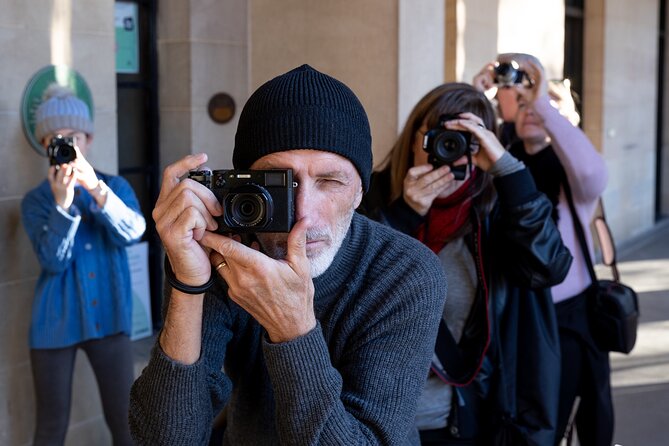
The group limit of 10 is one of the strongest features. Photography questions are often specific to the camera in your hand. A small class makes it more realistic for the tutor to help you find a setting, explain a lens choice, or suggest a better position for a shot.
A few more Sydney half-days to weigh up
- Sydney: Private Photoshoot outside the Opera House
★ 4.6 · 40 reviews - Sydney Photography Course in the Historic Rocks Area
★ 5.0 · 35 reviews - Private photo tour at Sydney’s most iconic locations
★ 4.9 · 12 reviews
Starting at Customs House at noon
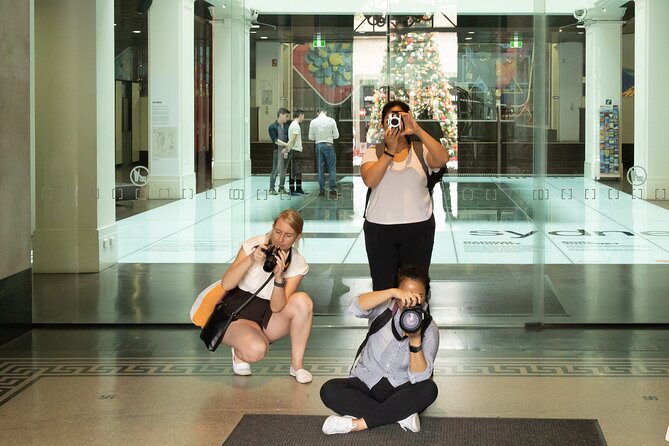
Customs House is the meeting point, at 31 Alfred Street, Sydney NSW 2000. The start time is 12:00 pm, and the activity returns to this same meeting point at the end.
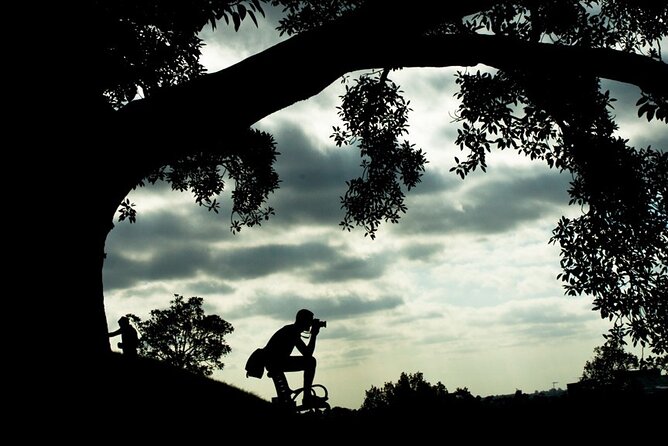
A midday start gives you plenty of morning time for other Sydney plans. It also means you should think about light before booking. The workshop specifically requires good weather, and much of the learning takes place outside. Sydney sun can be strong, so bring the usual outdoor basics and arrive ready to walk for several hours.
The session requires a moderate level of physical fitness. You should be comfortable moving between several harbour-side locations and spending much of the class on foot. The supplied information does not describe a long hike, but this is not a seated lecture.
Starting at Customs House also places you in a useful part of central Sydney. You are close to Circular Quay, the harbour crossings, and The Rocks, so the class can move between modern architecture, water views, old streets, and changing viewpoints without needing a coach.
Learning your camera before chasing the view
The workshop begins with the camera itself. You cover the main parts of a basic digital photography kit, including the camera and lenses, then work through the different shooting modes.
That order is sensible. If you do not know what your camera is asking you to control, technical advice can feel like a list of mysterious numbers. The class instead builds from recognition to use. You learn what the modes are for, then see how they support common photographic techniques.
The central goal is manual mode. Automatic settings can be handy, but they make many decisions for you. Manual control lets you make deliberate choices about the look of an image. You can begin to understand why a photo is too bright, too dark, blurred, or lacking the effect you wanted.
The course description does not promise an advanced specialist workshop. That is a good thing for a first class. You are introduced to essential principles, including composition, light, and pre-visualisation, without needing a long list of previous skills.
Pre-visualisation is especially useful. It means learning to imagine the picture before pressing the shutter. In a place like Sydney Harbour, where every corner offers an obvious subject, this helps you slow down and decide what you actually want the photograph to say.
Sydney Opera House: more than the standard postcard
The Opera House is the first listed stop, and it gives the class an immediate lesson in composition. The building is familiar, so simply photographing it head-on may produce a predictable result. The value here is learning to consider position, framing, lines, and the relationship between the building and its surroundings.
Your tutor can use the Opera House to show how a small change in viewpoint affects the balance of an image. You may find that the best picture is not the most obvious one. The workshop promises both better-known and less obvious photographic locations around the foreshore, so the emphasis is on seeing choices rather than ticking off a landmark.
Light is another key part of this stop. Harbour reflections, bright sky, white building surfaces, and darker nearby areas can challenge a camera’s exposure. This is a useful place to connect the technical lesson with a real problem. You learn that a camera does not always interpret a bright scene the way your eye does.
The drawback is that a famous subject can encourage everyone to make similar photographs. The tutor’s guidance is important here. If you want a class focused on personal creative choices, pay attention to the composition exercises rather than treating the Opera House as a quick photo stop.
Same harbour city, a completely different day out:
- Sydney: Opera House Guided Tour with Entrance Ticket
★ 4.8 · 8,312 reviews - All Inclusive Blue Mountain,Scenic World,Lunch,Koalas,ferry
★ 5.0 · 7,832 reviews - From Sydney: Blue Mountains Full-Day Trip
★ 4.5 · 4,471 reviews - Sydney Opera House Official Guided Walking Tour
★ 4.5 · 3,770 reviews
Harbour Bridge: lines, scale, and changing viewpoints
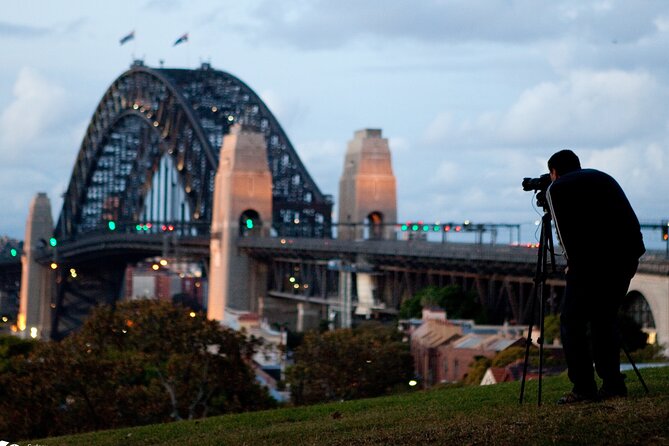
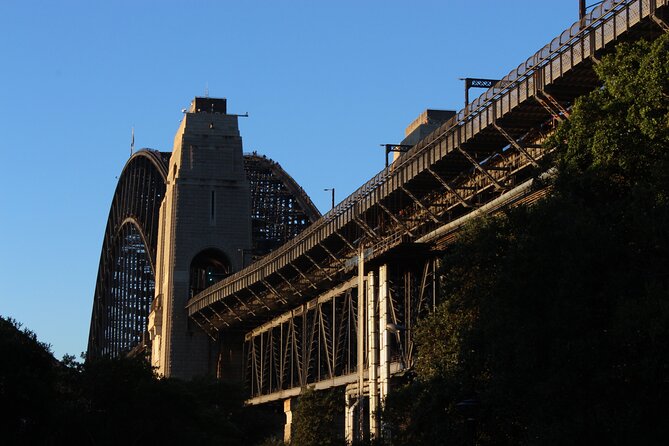
The Sydney Harbour Bridge provides a different set of photographic lessons. Its structure gives you strong lines, repeated shapes, and a clear sense of scale. That makes it useful for understanding composition in a way that is easy to see through the viewfinder.
The bridge can also show you how a subject changes when you adjust your position. A wide view can place the bridge within the harbour setting, while a closer composition can make the steel structure and its geometry the main subject. The workshop’s focus on pre-visualisation helps you decide which approach you want before taking several similar frames.
This is also a good setting for discussing light and exposure. Open harbour views can include bright sky, reflective water, and shaded structural elements at the same time. You learn to notice those contrasts and choose camera settings with a purpose.
The experience does not list a separate transport segment between stops. Expect the workshop to operate as a walking session around the foreshore and nearby precincts. Wear comfortable shoes and keep your camera easy to reach. You will get more from the lesson if you can move, stop, adjust, and shoot without wrestling with a heavy or poorly arranged kit.
Circular Quay: a practical lesson in changing scenes
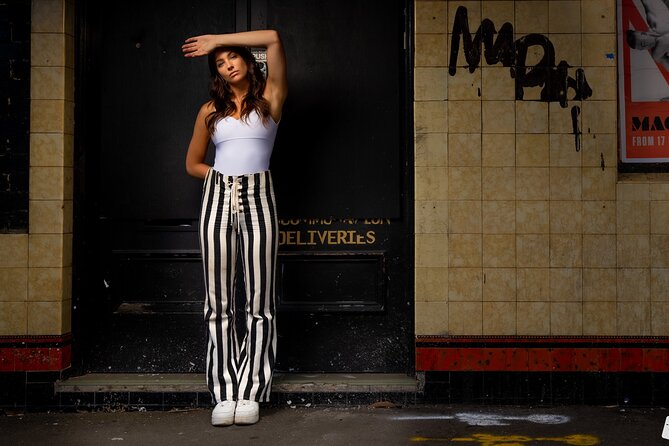
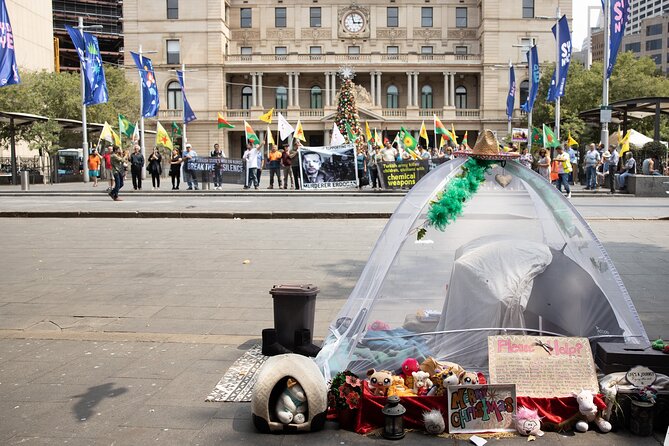
Circular Quay brings movement and variety into the class. The setting connects the harbour’s major landmarks with the city’s public spaces, giving you more than one type of subject to photograph.
This is where the workshop’s practical design can pay off. You may move from a broad harbour view to architectural details or people in motion. Each scene asks a different question. Do you want to freeze movement? Do you want a sense of motion? Should the subject fill the frame, or should the surrounding space remain part of the story?
You can use these changes to test the camera modes introduced earlier. The point is not to memorise every function. It is to learn when a particular mode or manual adjustment helps you create the image you have in mind.
Circular Quay is also a useful place to practise timing. A strong photograph may depend on the arrangement of several elements for just a moment. The tutor’s role is to help you notice those opportunities and understand why they work.
Do not expect a private photo shoot with unlimited time at every angle. The group needs to move through several locations within four hours. If you already have a long list of personal shots you want from the Opera House and bridge, the class may require you to balance your own agenda with the lesson.
The Rocks: historic streets and closer compositions
The final listed stop is The Rocks, where the visual mood changes from open harbour views to streets, buildings, textures, and smaller details. This makes it a useful finish because it pushes you beyond the grand panorama.
The Rocks can help you practise composition at a closer scale. Instead of relying on a skyline, you can look for relationships between old surfaces, doorways, lanes, signs, and changing light. The workshop describes the area as including both known and less familiar photographic locations, so the tutor can use the precinct to show how a good image may come from careful observation rather than a famous viewpoint.
This section also gives you a chance to review what you have learned. You can compare the way you handled a wide harbour scene with the way you frame a tighter street image. Composition is not one fixed formula. It changes with the subject, the available light, and the feeling you want to create.
Because The Rocks is close to the starting area, the workshop ends back at Customs House. That makes the finish straightforward for anyone continuing with plans in central Sydney.
Teaching style and the value of a real photojournalist
The workshop is led by an award-winning Sydney-based photojournalist, and Daniel Linnet is identified as an instructor associated with the teaching team. Glenn Lockitch is also named in the supplied course material as a tutor whose images are used alongside student work.
The most praised teaching qualities are clarity and encouragement. Daniel Linnet is described as easy to follow and ready to share his extensive experience. That matters more than a long list of credentials. Photography instruction can become confusing quickly, especially when a tutor assumes that everyone knows the basic terms.
The course also appears to put real weight on helping you move from theory to practice. That is the part I value most. You are not only told what a setting does. You use it while looking at Sydney, then see how your choice changes the picture.
The positive feedback also points to the class making people more interested and excited about photography. That is a meaningful measure for a beginner workshop. You do not need to leave as an expert. You do need enough confidence to keep using the camera after the class ends.
Still, your experience will depend partly on your starting point and camera. Someone already comfortable with manual exposure may find the early material basic. Someone who has mostly used automatic mode should find the structure more useful.
What the $107.59 price buys you
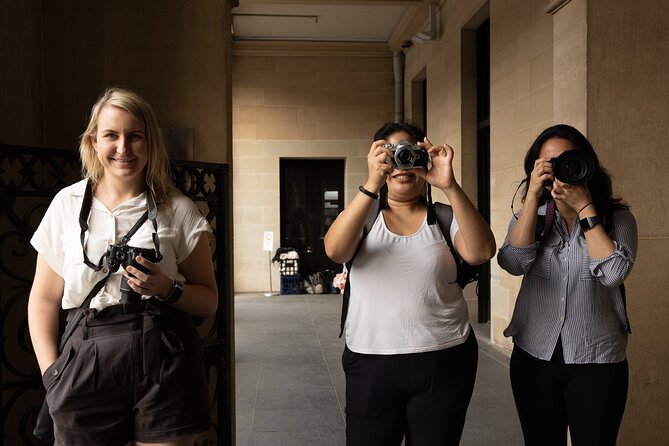
At $107.59 per person, the price is reasonable if you want direct instruction rather than a sightseeing walk with a few camera tips. You are paying for about four hours of teaching, a small group capped at 10, and practical access to several of Sydney’s most useful photo settings.
The value is strongest for a beginner who owns a suitable camera but has not yet learned how to control it. A private lesson would usually provide more individual attention, but this workshop offers a lower-cost way to learn with a professional tutor and practise in several real locations.
You should also consider what is not included in the stated price. The supplied information does not mention camera hire, transport, meals, printed materials, or edited images. Bring your own compatible camera and lenses, since the class is built around operating your equipment.
The price is less compelling if you only want a quick set of harbour photographs. You can visit these locations independently. The reason to book is the instruction, especially the chance to connect camera settings, composition, and light while you are actually making pictures.
Who will get the most from this workshop
This is a good match for you if you:
- Own an SLR or mirrorless camera with full manual capability.
- Want a clear introduction to shutter speed, aperture, shooting modes, and creative control.
- Learn better by taking pictures than by sitting through a technical lecture.
- Are returning to photography after time away.
- Want a small-group class in central Sydney.
- Like the idea of using major landmarks and old streets as practical subjects.
It is not suitable for compact cameras without full manual capability. Check your camera before booking. The key requirement is not simply having a digital camera. You need to be able to control it fully.
The class may also suit someone who has learned basic theory but lacks confidence outdoors. The movement between the Opera House, bridge, Circular Quay, and The Rocks gives you several types of subject in one session.
Practical details before you book
Confirmation is provided when you book, and the activity uses a mobile ticket. Service animals are allowed, and the meeting point is near public transportation.
The group can include up to 10 people. The session begins at noon and ends back at Customs House after about four hours. Plan for an outdoor class and a moderate level of physical activity.
Cancellation is free up to 24 hours before the local start time for a full refund. Changes or cancellations made less than 24 hours ahead are not accepted for a refund. Poor weather can lead to a new date or a full refund, and the same applies if the minimum number of participants is not reached.
The weather rule is worth taking seriously. Photography depends heavily on conditions, and the class needs to operate outdoors. Keep your schedule a little flexible if the forecast looks uncertain.
Should you book the Sydney Harbour photography workshop?
Book it if you want to stop relying on automatic mode and learn through actual photographs. The combination of a maximum 10-person group, a professional Sydney photojournalist, and four distinct locations gives beginners a useful mix of instruction and practice.
I would especially recommend it to someone who has just bought an SLR or mirrorless camera, or to anyone returning to photography after a long gap. The clearest benefit is not a single Opera House picture. It is leaving with a better sense of how to see a scene, choose a setting, and make a deliberate image.
Skip it if your camera lacks full manual controls, if you want a private lesson, or if your main goal is a relaxed sightseeing tour with no technical work. For the right participant, $107.59 buys a practical introduction in one of the world’s most photogenic parts of Sydney.
FAQ
Where does the photography workshop start?
The workshop starts at Customs House, 31 Alfred Street, Sydney NSW 2000, Australia.
What time does the experience begin?
The start time is 12:00 pm.
How long does the workshop last?
The experience lasts approximately four hours.
Where does the workshop finish?
The activity ends back at the meeting point at Customs House.
What type of camera do I need?
You need a camera with full manual capability, including an SLR or mirrorless camera. Compact cameras without full manual capability are not suitable.
Can I cancel for a full refund?
Yes. You can cancel at least 24 hours before the local start time for a full refund. Poor weather or failure to reach the minimum number of participants may also result in a different date or a full refund.
Just added around Sydney
- Sydney Eye Tower Admission Ticket★ 3.5 · 3 reviews
- Uncover the Magic Gin Distillery Adventure at Millsheds Bowral★ 4.5 · 3 reviews
- Guided Snorkel Tour at Australias most iconic beach★ 5.0 · 3 reviews
- Sunrise & Surf Beach Lifestyle Photoshoot★ 5.0 · 3 reviews
- Honey Farm Tour. Morning Tea. Guided Tasting★ 5.0 · 3 reviews
- Sydney Beaches Half Day Drive and Walk Tour★ 5.0 · 3 reviews
- Tour from Eden to Merimbula Wetlands Wildlife and Coastline★ 5.0 · 3 reviews
- From Sydney Blue Mountains Private Tour with Wildlife Park★ 3.5 · 3 reviews
Workshops, compared.
Mosaic Art Classes Sydney: Turkish Lamp Workshop
Read our review →

Paint and Sip Classes Sydney: Ceramic Plates & Bowls
Read our review →
Paint and Sip Classes Sydney: Acrylic Art, Canvas & Wine
Read our review →
Resin Art Classes Sydney: Cheeseboards & Coasters
Read our review →Browse the lists this tour appears in