
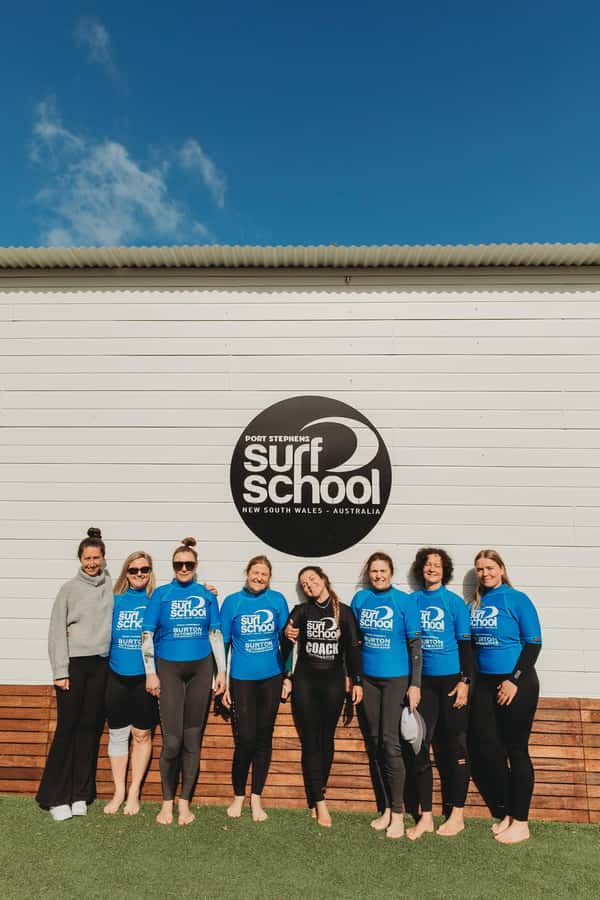
Reviewed · SURF LESSONS
Port Stephen: One Mile Beach Group Surf Lesson
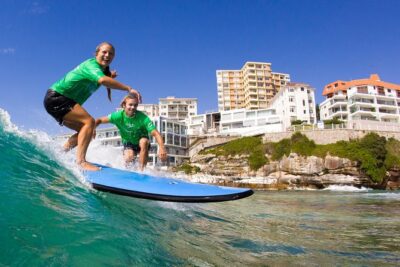
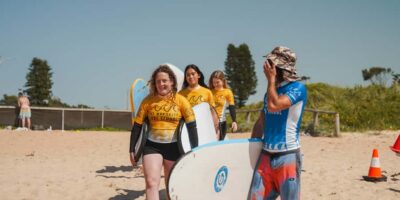
Catching your first wave at One Mile Beach is the whole point, and this lesson gives you a sensible way to get there. You begin in waist-deep water with white-water waves, practise the stand-up move, then work toward riding on your own. Coach Troy has earned special praise for clear demonstrations and for pushing beginners into waves suited to their ability.
I like the fact that the surfboard, wetsuit, and rashie are included, so you do not need to assemble a kit before your first lesson. I also like the small maximum of 16 people, although the lesson may not run for the full 90 minutes if fewer than four people attend.
In This Review
- Key points for your One Mile Beach lesson
- Starting at One Mile Beach with the right expectations
- What happens before you enter the water
- Learning to stand in waist-deep water
- Why the wave selection matters
- A small group, with one important condition
- What makes this good for children and adults
- Is $60 good value for 90 minutes?
- The instructors and teaching style
- Weather, timing, and the beach setting
- Who should book this lesson?
- Booking flexibility and what to bring
- Should you book the One Mile Beach surf lesson?
- FAQ
- Where does the surf lesson take place?
- How long is the surf lesson?
- How much does the lesson cost?
- What equipment is included?
- What should I bring?
- Can children join the lesson?
- What language does the instructor speak?
- Can I cancel or pay later?
Key points for your One Mile Beach lesson
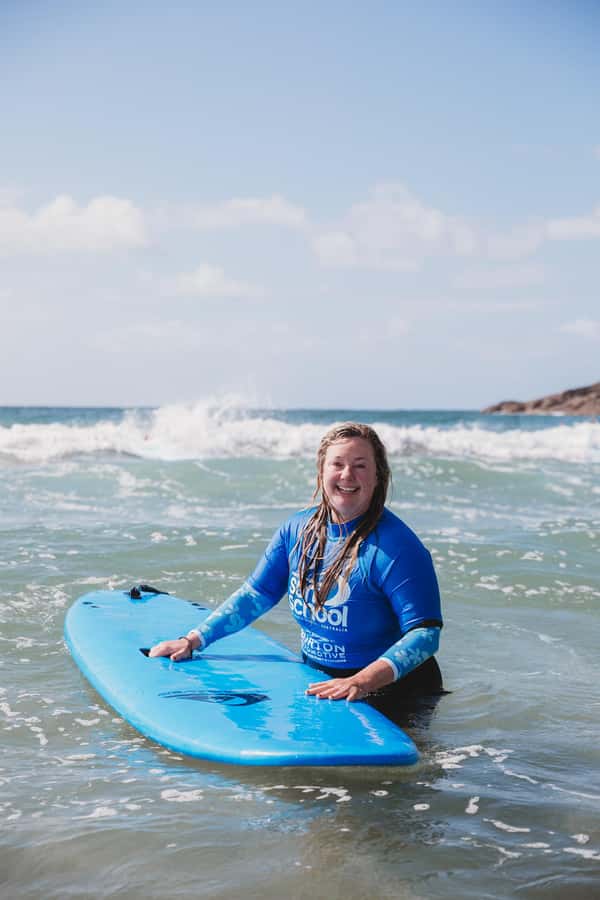
- First-wave focus: Start with white-water waves in waist-deep water, a friendly setting for beginners.
- Coach Troy’s patient approach: Expect safety guidance, dry-land practice, help with timing, and corrections after each attempt.
- Full beginner kit included: Your surfboard, wetsuit, and rashie are supplied.
- Suitable for families: Children aged 5 and over can join adults in the lesson.
- Small group size: A maximum of 16 participants allows more attention than a large beach class.
- Flexible booking: You can cancel up to 24 hours before the activity for a full refund and reserve now while paying later.
Starting at One Mile Beach with the right expectations
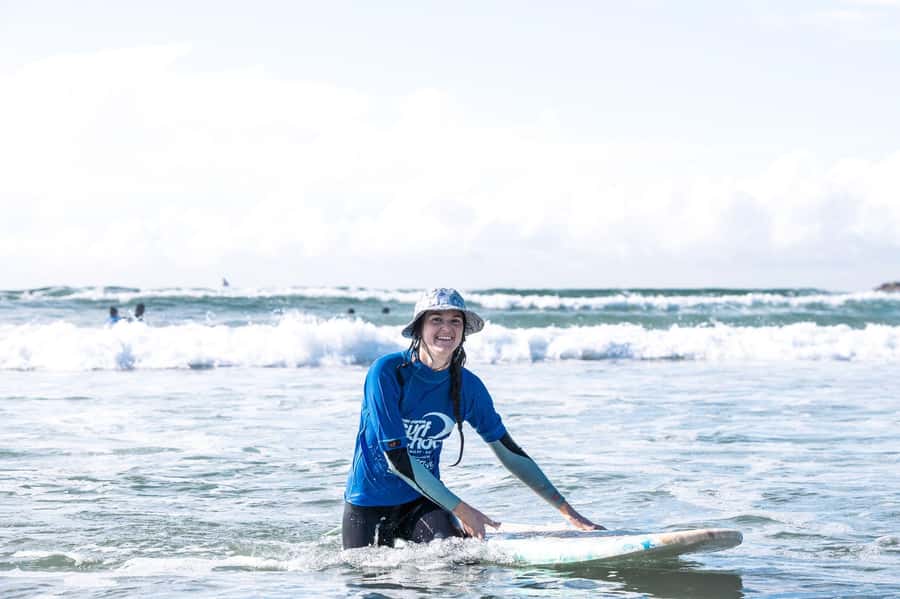
This is a 90-minute group surf lesson at One Mile Beach, near Port Stephens in New South Wales. It is aimed mainly at first-timers, but the lesson also suits you if you have stood on a board before and need help with the basics.
The focus is not on covering a long stretch of beach or ticking off several activities. You spend the session learning the building blocks of surfing: how to handle the board, how to read the incoming white water, how to get into position, and how to stand up without losing balance at once.
That narrow focus is useful. Surfing looks simple from the shore, but the timing can feel awkward when you are lying on a board with a wave moving underneath you. A coach who can select a manageable wave and give a short correction at the right moment can make a big difference.
Lessons run daily, rain or shine. The information does not promise identical conditions every day, so you should understand that the sea will still shape the session. The lesson is designed to work with beginner conditions, but surfing always involves moving water and changing waves.
More surf lessons near Port Stephens:
- Port Stephens Unlimited Sandboarding and Sand Surfing
★ 4.5 · 35 reviews - Bondi Beach: 2-Hour Surf Lesson Experience for Any Level
★ 4.9 · 935 reviews - Surfing Lessons on Sydney’s Bondi Beach
★ 5.0 · 267 reviews
What happens before you enter the water
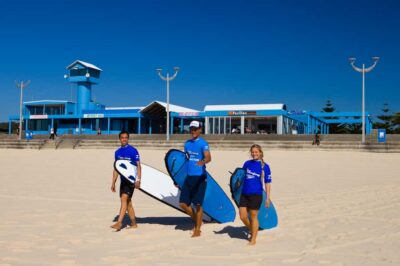
You need to bring swimwear and a towel. The surf school supplies the main equipment: a surfboard, wetsuit, and rashie. That makes the $60 price easier to judge, since you are paying for instruction and equipment rather than only a short talk on the beach.
The session includes a safety briefing before the practical work begins. This matters most if you have never surfed, since you need to know how to move with the board and how to stay aware of the water around you.
Coach Troy’s teaching sequence has received particularly strong praise. He first gives beginners a safety introduction, then demonstrates the movement on dry land. You get a chance to practise the stand-up technique before trying it in the water, which means your first attempt is not built entirely on guesswork.
I appreciate this order. A dry-land rehearsal lets you think about the movement without a wave pulling at your board. You can focus on the basic sequence, then take that knowledge into the shallows.
Learning to stand in waist-deep water
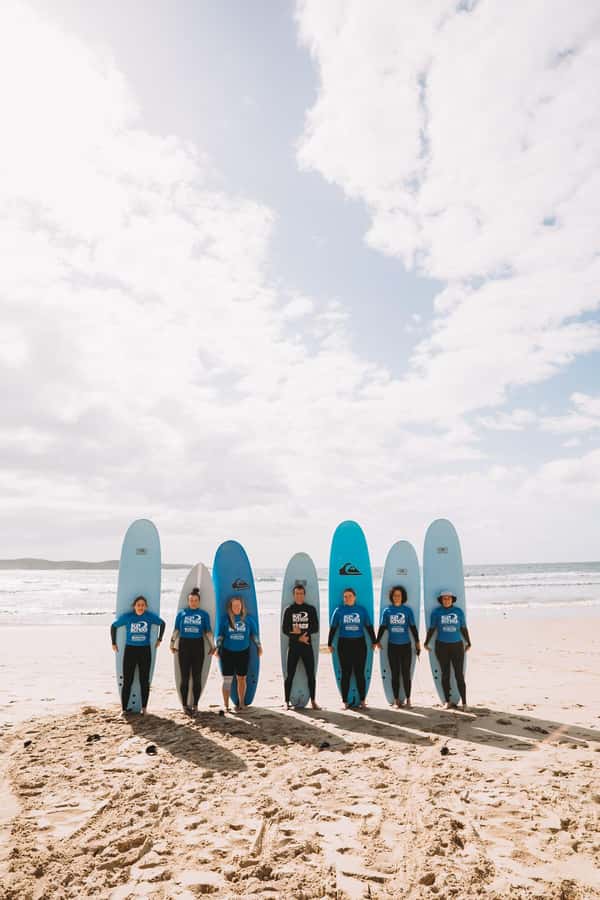
The water portion begins in waist-deep water with white-water waves. These are the broken waves that have already rolled over, rather than the larger unbroken waves farther out. For a beginner, that is the right place to start because the water gives the board a push without requiring advanced positioning.
Your first task is to catch the foam of the wave while lying on the board. The coach helps you understand when to let the wave carry you, then guides you through the stand-up technique. The aim is to move from lying down to standing in one controlled action rather than scrambling upright after the board has already slowed.
The lesson is built around quick progress. Most students are expected to surf after one lesson, but that does not mean everyone will produce a long, graceful ride. Your first success may be a short run in the white water, and that is still useful. It shows you how the board responds and gives you a base for later lessons.
A strong feature is the individual correction during repeated attempts. Troy was praised for noticing small mistakes and explaining how to fix them, so the next try could improve immediately. That kind of feedback is more useful than general encouragement alone.
Why the wave selection matters
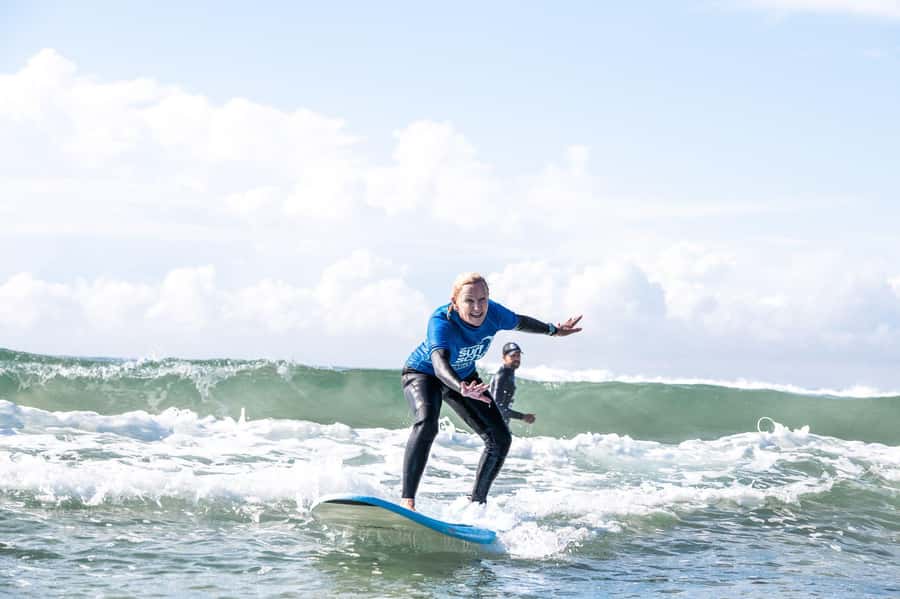
For beginners, the right wave is often more important than brute effort. A wave that is too weak may leave you sitting still, while one that is too powerful can knock the board sideways and make the whole process feel harder than it needs to be.
The coaching described for this lesson includes judging which waves suit each person. That helps you learn the difference between a useful push and a wave that is simply too much for your current skill.
You also learn to handle different types of surf. That gives the lesson more value than simply being pushed into one wave after another. You begin to understand that surfing involves reading the water, not just performing a stand-up move.
I would still keep your expectations realistic. The success rate is described as high, but the session cannot control the weather, surf, or your own comfort in the water. A first lesson can teach you the method and give you a genuine first ride, but it may not turn you into a confident surfer in 90 minutes.
A few more Port Stephens half-days to weigh up
- Mosaic Art Classes Sydney: Turkish Lamp Workshop
★ 5.0 · 391 reviews - Sydney: Maroubra Surf Lesson
★ 4.7 · 188 reviews - Paint and Sip Classes Sydney: Ceramic Plates & Bowls
★ 5.0 · 126 reviews - Winemaking Class at McCaffrey’s Estate
★ 5.0 · 97 reviews
A small group, with one important condition
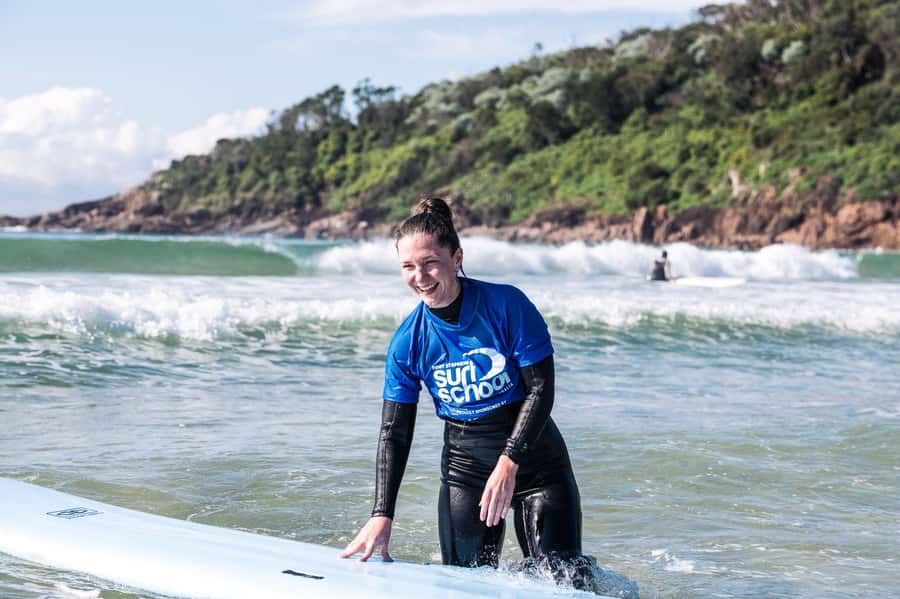
The maximum group size is 16 people. That is small enough to allow a coach to watch several attempts and offer corrections, while still giving the lesson a social feel. It is a good setup if you are travelling with family or friends and want to learn together.
The group is also described as private. Since the information gives both a private-group format and a maximum of 16 participants, check the exact arrangement when booking if the group makeup matters to you.
There is one practical catch. If fewer than four people attend, the lesson will not run for the full 1.5 hours. That may not matter if you mainly want an introduction and a few chances to stand up, but it is worth knowing if you are comparing this with a fixed-length private lesson.
The smaller setting has another benefit: the instructor can notice individual progress. One participant described a class where everyone received attention, while another appreciated how the coach encouraged each person and seemed genuinely pleased when they improved. That is the kind of atmosphere that helps nervous beginners keep trying after a fall.
What makes this good for children and adults
Children aged 5 and over can take part, making this a useful family activity. The lesson does not separate the experience into a children’s version and an adult version in the supplied details, so families should expect to learn the same core skills together.
Adults who feel awkward about starting late should not worry about the lesson being aimed only at children. The coaching centres on safety, dry-land practice, wave choice, and the stand-up technique, all of which are useful at any age.
I would choose this lesson for a family with mixed ability because beginners can work on the same basic goal without needing specialist equipment. It also suits two adults who have never surfed and want a short, structured introduction rather than committing to a full day.
Children under 5 cannot join. The supplied information does not give further age, swimming, fitness, or accessibility requirements, so you should check those points directly if they affect your booking.
Is $60 good value for 90 minutes?
At $60 per person, the lesson offers reasonable value for a first surf experience because the fee includes the coach, surfboard, wetsuit, rashie, and 90 minutes at One Mile Beach. Buying or hiring those items separately would make a beginner session more complicated and could cost more before instruction is added.
The real value depends on what you want from the outing. If you only want to sit on a board in the shallows for a few minutes, the price may feel high. If you want proper safety guidance, a dry-land demonstration, wave selection, and repeated attempts with coaching, the package is more convincing.
The high success rate also matters. A lesson where you have a fair chance of standing on the first day feels more worthwhile than one that spends the whole time explaining theory. Still, no surf school can guarantee a perfect wave or a long ride for every participant.
The equipment inclusion keeps the experience simple. Bring swimwear and a towel, then let the school provide the rest. You do not need to arrive with a board or wetsuit, which is especially helpful if One Mile Beach is only one stop on a wider Port Stephens visit.
The instructors and teaching style
The named instructor connected with the strongest praise is Troy. His approach combines a safety briefing, dry-land exercises, careful wave selection, and small technical corrections. That is a sound teaching pattern for a first lesson because it deals with both confidence and mechanics.
The coaching also appears encouraging without becoming empty cheerleading. The point is not only to tell you that you are doing well, but to explain why a particular attempt worked and what to change next time.
Other instructors also lead the daily sessions, and the activity includes experienced coaches. The information does not name all of them, so I would not book expecting Troy specifically unless the school confirms his schedule.
English is the teaching language. That is important if you need instruction in another language, since no other language option is given.
Weather, timing, and the beach setting
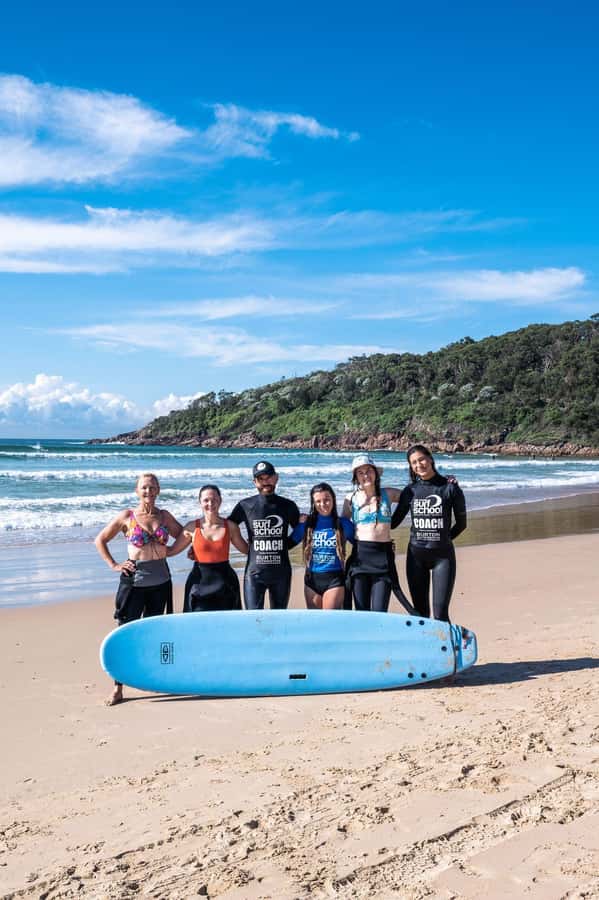
The class runs in rain or shine and is offered daily. That gives you useful flexibility, but it also means you should be ready for an outdoor activity rather than expecting a weather-proof attraction.
One Mile Beach is the setting for the full lesson, from the initial instruction through the water practice. The activity does not include transport or a separate sightseeing stop, so allow time to get yourself to the beach and arrive ready in swimwear.
The duration is 90 minutes, but remember the four-person condition. A full class can use the time for several rounds of practice, while a very small group may finish sooner.
I would plan the rest of your day with a little breathing room. You may need time to change, dry off, and deal with wet equipment, even though the supplied information does not specify changing facilities or storage. Bring a towel and keep your plans after the lesson flexible.
Who should book this lesson?
I would recommend it for:
- First-time surfers who want a guided introduction
- Families with children aged 5 and over
- Adults who want to learn in a friendly group
- People who need all surf equipment supplied
- Visitors looking for a 90-minute activity near Port Stephens
- Beginners who value hands-on correction rather than a large lecture
I would think twice if you want a long, advanced surf session or a private one-to-one coach. The class is beginner-focused, and the maximum group size is 16. It also may be shorter than 90 minutes if fewer than four people attend.
The lesson is best for you if the goal is simple: learn the basics, get comfortable with the board, and try to ride a first wave. It is not presented as advanced coaching, a full-day surf camp, or a tour of the wider coast.
Booking flexibility and what to bring
You can cancel up to 24 hours in advance for a full refund. You can also reserve your place and pay later, which is useful if your Port Stephens schedule is still changing.
Bring swimwear and a towel. The school provides the board, wetsuit, and rashie, as well as the coaching.
Before paying, check the starting time available for your chosen date. Since the lesson runs daily but exact times vary, availability is the detail that determines whether it fits your day.
Should you book the One Mile Beach surf lesson?
Book it if you want a practical first taste of surfing and like the idea of getting into the water quickly. The combination of included equipment, dry-land practice, waist-deep white-water work, and hands-on coaching gives you a clear path from nervous beginner to first short ride.
I especially like the attention to suitable waves and small technique fixes. Those details can turn a frustrating lesson into one where you understand what to try next.
Skip it if you need a guaranteed full 90 minutes with fewer than four people, advanced surf training, or instruction in a language other than English. For most beginners, families, and pairs visiting Port Stephens, $60 is a fair price for a well-supported introduction at One Mile Beach.
FAQ
Where does the surf lesson take place?
The lesson takes place at One Mile Beach in New South Wales, Australia.
How long is the surf lesson?
The scheduled lesson lasts 90 minutes, or 1.5 hours. If fewer than four people are in the group, it will not run for the full 1.5 hours.
How much does the lesson cost?
The price is $60 per person.
What equipment is included?
The price includes a surfboard, wetsuit, and rashie. Experienced coaching and the 90-minute lesson are also included.
What should I bring?
Bring swimwear and a towel.
Can children join the lesson?
Yes. The lesson is suitable for children aged 5 and over. Children under 5 cannot take part.
What language does the instructor speak?
The instruction is provided in English.
Can I cancel or pay later?
You can cancel up to 24 hours in advance for a full refund. You can also reserve your place and pay later.
Just added around Port Stephens
- Port Stephens: Sunset on the Bay Cruise★ 4.6 · 3 reviews
- Anna Bay: Irukandji Entry + Coastal Currents Snorkel★ 3.8 · 6 reviews
- Nelson Bay: Marine Discovery Cruise with Snorkeling★ 4.3 · 8 reviews
- Anna Bay: Irukandji Entry with Zebra Shark Snorkel★ 4.7 · 9 reviews
- Port Stephens: Dolphin Watch & Eco Adventure★ 4.4 · 15 reviews
- Small Group Port Stephens + Dolphins + 4WD/sandboarding ex Sydney★ 4.5 · 18 reviews
- Port Stephens: Worimi National Park Sandboarding Adventure★ 4.8 · 18 reviews
- Port Stephens, Beach and Sand Dune 4WD Passenger Tour★ 5.0 · 30 reviews
Surf Lessons, compared.

Port Stephens Unlimited Sandboarding and Sand Surfing
Read our review →
Browse the lists this tour appears in