

Reviewed · ABSEILING & CANYONING
Small-Group Weekend Rock Climbing Adventure from Katoomba
The best part of this two-day course is the quick move from instruction to real sandstone. You learn knots, belaying, abseiling, and safe movement on rock, then put those skills to work on graduated Blue Mountains climbs rather than spending the whole weekend in a classroom.
I like two things right away: all technical equipment is supplied, and lunch is included both days. I also like the clear progression from safety skills on day one to a full day of climbing on day two. The main consideration is physical: you need a moderate fitness level, and the minimum age is 14.
In This Review
- Key points to know before booking
- From Katoomba Street to Blue Mountains sandstone
- Day one: safety first, then onto the rock
- Day two: more climbing, less classroom time
- Why this works for indoor climbers
- How the guides shape the experience
- What the price includes, and what it does not
- Who should book this course
- Practical details for a smoother weekend
- Should you book the Katoomba climbing weekend?
- FAQ
- Where does the course start?
- What time does the course begin?
- Where does the activity finish?
- Is hotel pickup included?
- What equipment is supplied?
- Are meals included?
- Is previous climbing experience required?
- What is the minimum age?
- What happens if bad weather cancels the course?
Key points to know before booking
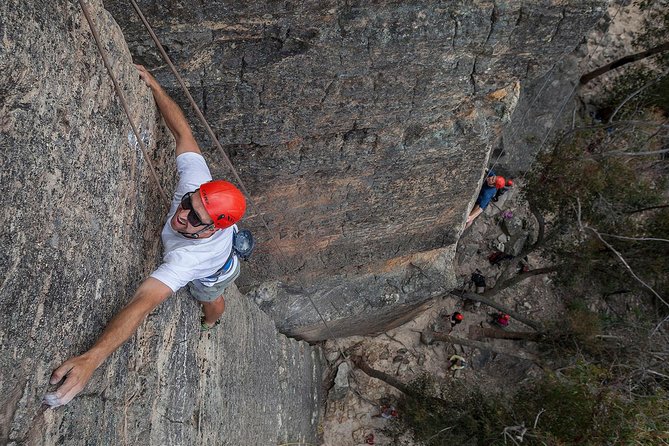
- Two full days from Katoomba: Meet at 166 Katoomba Street at 8:45am on both days and return to the same point.
- Built for beginners: Learn rope handling, knots, anchors, belaying, abseiling, and basic climbing movement from the ground up.
- A useful step from the gym to real rock: Indoor climbers can work on outdoor technique, equipment, and natural holds.
- Everything technical is provided: Ropes, helmets, harnesses, climbing shoes, and hardware are included.
- The second day is climb-focused: Your instructor aims to take you on varied routes suited to the group’s ability.
- Small by outdoor-course standards: The maximum group size is 15, with nationally and internationally certified instructors.
From Katoomba Street to Blue Mountains sandstone
Your morning begins at the Paddy Pallin Adventure Center, at 166 Katoomba Street in Katoomba. The start time is 8:45am, so you will want to arrive ready rather than treating the meeting point as a casual café stop.
A vehicle takes the group from town to the climbing area. Hotel pickup and drop-off are not included, so you need to make your own way to Katoomba Street. The activity ends back at the meeting point each day, which keeps the arrangement simple if you are staying in Katoomba.
The exact climbing area is not specified in advance. That is useful in an outdoor course because instructors can choose from suitable Blue Mountains locations and routes. It also means you should not book this expecting one fixed rock wall or a sightseeing circuit with named viewpoints.
The Blue Mountains setting is a major part of the appeal. You are not only learning a sport, you are handling ropes and climbing on real sandstone amid bush scenery. The focus remains on climbing rather than sightseeing, but the setting gives the weekend a strong sense of place.
More abseiling and canyoning days:
- Full-Day Canyoning Experience at Stunning Empress Canyon
★ 5.0 · 87 reviews - Blue Mountains: Abseiling and Canyoning Experience
★ 4.8 · 69 reviews - Half-Day Abseiling Adventure in Blue Mountains National Park
★ 5.0 · 59 reviews
Day one: safety first, then onto the rock
The first day begins with the skills that make outdoor climbing possible. You learn how to use a harness, helmet, ropes, technical hardware, and climbing shoes, with the instructor explaining how each part fits into a safe system.
Knots and rope handling come early because they are the language of climbing. You also work on belay anchors and correct belay technique. For a beginner, belaying can feel like a lot to remember, but this is exactly the kind of skill that deserves careful practice before anyone starts climbing higher.
The course also covers safe movement on rock. That includes learning how to use footholds and handholds efficiently, rather than pulling hard with your arms at every opportunity. Natural rock rarely offers the neat, obvious holds found in a climbing gym, so this section is especially useful for indoor climbers making the change outdoors.
Abseiling is another key part of the first day. You learn the fundamentals of descending with a rope and using modern abseiling equipment. It adds variety to the day and helps you understand how rope systems work from a different position.
The important detail is that instruction does not remain separate from climbing for long. After the initial safety and belay work, you move onto the rock and begin a selection of graduated climbs. That gives you a chance to repeat each new skill in a real setting while the instructor is nearby.
Lunch is supplied, and the group eats outdoors in the bush. Special dietary needs should be provided at booking. Drinks are not included unless specifically stated, so carry what you need for the day.
Day two: more climbing, less classroom time
The second day is devoted to climbing. By then, you have had an introduction to rope work, belaying, abseiling, and equipment, so the instructor can spend more time helping you climb and less time explaining basic systems.
The plan is to attempt as many varied climbs as possible within the group’s ability. That does not mean racing from route to route. It means using different climbs to build better footwork, balance, hold selection, and confidence on natural rock.
I like this format because the second day gives you room to improve through repetition. One climb may show you how much you rely on your arms. Another may make you think more carefully about foot placement. With an instructor adjusting the routes to suit the group, the course can remain challenging without becoming a test of strength.
The available information says the goal is for you to finish able to climb competently with experienced leaders on short, moderately graded rock climbs. That is a sensible outcome. This is not a guide-leading qualification or an advanced multi-pitch course, and you should not book it expecting independent leadership skills by the end.
Previous course participants have worked with guides including Liam, Pedro, Scott, Zuza, and Lewis. The guide assigned to your date may be different, but the strongest pattern in the feedback is the instructors’ ability to adjust the climbing to the group. Scott is described as especially enthusiastic and good at meeting people at their current level, while Liam is praised for choosing routes that suited the group and showing patience.
That flexibility matters more than a famous route name. A beginner course works best when you are learning steadily, not being pushed onto a climb that looks impressive but leaves you overwhelmed.
Why this works for indoor climbers
A climbing gym teaches useful basics, but outdoor rock adds several new problems. Holds are less obvious, surfaces feel different, and the route may not look like a clean line of colored plastic grips.
This course addresses that change directly. You learn how to select and use outdoor equipment, how to handle ropes, how to belay, and how to move over natural holds. The instructor can also show you how to use footholds and handholds more efficiently, which may improve your gym climbing as well.
The course is also a good fit if you have never climbed before. You do not need to arrive with a personal rack, rope, harness, or climbing shoes. All technical equipment is supplied, including ropes, helmets, harnesses, technical hardware, and shoes.
That included equipment is a real saving for a first outdoor weekend. Buying or hiring everything separately would add cost and create the risk of arriving with gear that is unsuitable or unfamiliar. Here, the instructor can show you how to use the equipment as part of the lesson.
You should still expect to work. Climbing uses balance, grip, legs, and concentration, and the course requires moderate physical fitness. The supplied information does not give a walking distance, route grade, or exact height, so you should ask the operator if you have concerns about fitness or any physical limitation.
A few more Blue Mountains half-days to weigh up
- Exclusive Blue Mountains Wildlife and Bushwalk Tour From Sydney
★ 4.5 · 1,087 reviews - Blue Mountains Sunset Waterfalls Wildlife Tour From Sydney
★ 4.7 · 897 reviews - Katoomba: Lyrebird Hop-On Hop-Off and Scenic World Pass
★ 4.6 · 553 reviews - Blue Mountains Day Tour With Bushwalks, Waterfalls & Featherdale
★ 5.0 · 305 reviews
How the guides shape the experience
Technical instruction is only half the job on a beginner course. The guide also needs to judge when to explain more, when to let you try, and when to choose an easier or harder climb.
That human element comes through strongly in the available feedback. The guides are repeatedly described as friendly, patient, enthusiastic, and safety-focused. One family found that their young climber became able to manage many aspects of climbing independently, which suggests the teaching is practical rather than overly hands-off.
The course also appears suited to mixed ability within one booking. One person may be new to climbing, another may climb indoors, and a third may simply want a weekend challenge. The instructor’s job is to choose suitable routes and help each person develop.
The maximum group size is 15. That is not a private lesson, and the amount of climbing time you get can depend on how many people attend and how quickly the group handles equipment. Still, it is small enough to keep the course more personal than a large commercial outing.
If you want your own schedule, the operator can also run the course as personal training or for a private group on selected dates. That option should be discussed directly before booking, since the standard experience has a set meeting time and group structure.
What the price includes, and what it does not
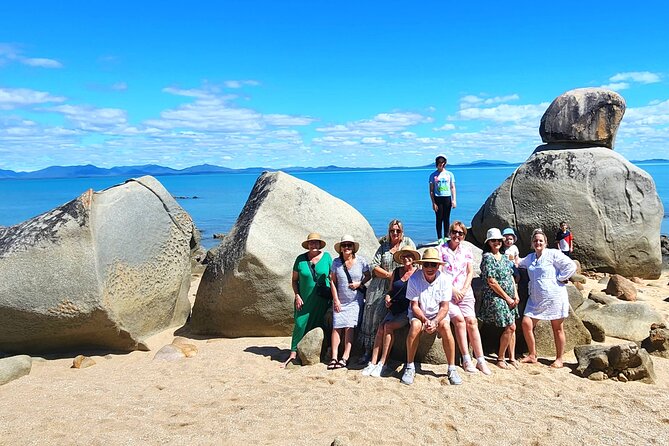
The listed price is $394.48 per person for approximately two days. The value is strongest if you are starting from scratch because the fee includes professional instruction, national park fees, technical equipment, lunch each day, and GST.
The equipment package is substantial. You are not just receiving a helmet and harness. The course supplies ropes, climbing shoes, technical hardware, and the gear needed for the abseiling and belay sessions.
Lunch also removes one small but real planning task. You still need to arrange drinks, and the fee does not cover accommodation or transport to and from your hotel. If you are not staying close to central Katoomba, add the cost and time of getting to 166 Katoomba Street each morning.
For two days of instruction and guided climbing, the price makes more sense than comparing it with a single half-day activity. You are paying for a structured introduction to outdoor climbing, not simply a one-time ascent with a guide.
The best value goes to someone who wants skills they can use again. If you only want a quick taste of climbing and have one free afternoon, a shorter activity may suit you better. If you want to make the transition from an indoor wall to outdoor routes, the two-day format gives you time to practice.
Who should book this course

This is aimed at beginners with little or no outdoor experience. It also suits indoor climbers who want to understand natural rock, outdoor equipment, rope systems, and abseiling.
The minimum age is 14, and children must be accompanied by an adult. That age rule is important because some feedback refers to younger family members, but the stated booking requirement for this experience is 14 or older.
You should have a moderate physical fitness level. You do not need to bring technical gear, but you do need to be ready for two active days outside and comfortable taking instruction around ropes and rock.
I would choose this course if you want a guided introduction with a strong safety base. I would look elsewhere if your main goal is advanced lead climbing, multi-pitch climbing, or a private schedule without arranging a separate private course.
The experience also requires suitable weather and a minimum number of bookings. If poor weather cancels the course, you can choose another date or receive a full refund. The same applies if the minimum group size is not reached.
Practical details for a smoother weekend

Wear clothing that allows free movement and expect to spend the day outdoors. The supplied information does not set out a clothing list, so confirm any gear questions with Australian School of Mountaineering before departure.
Bring drinks, since they are not included. Tell the operator about dietary requirements when booking so the supplied lunches can be planned properly.
The mobile ticket makes access to your booking straightforward, and confirmation is provided at booking. You meet at 8:45am on both days, with no hotel pickup included.
Free cancellation is available if you cancel at least 24 hours before the local start time. Changes or cancellations inside that 24-hour window are not refunded, except when the operator cancels because of weather or insufficient numbers.
Should you book the Katoomba climbing weekend?
Book it if you want more than a photo and a single guided climb. The two-day structure gives you time to learn belaying, knots, abseiling, rope handling, and outdoor movement, then use those skills on varied Blue Mountains rock.
I especially like the combination of full equipment hire and lunch with certified instruction. It reduces the cost and hassle of trying outdoor climbing for the first time. The course also gets strong marks for patient teaching, safety, and guides who adjust routes to match ability.
Think twice if you need hotel transfers, dislike group activities, or want advanced climbing instruction. For the right person, though, this is a practical first step toward climbing outdoors with experienced leaders, set in one of Australia’s best-known climbing areas.
FAQ
Where does the course start?
It starts at 166 Katoomba Street, Katoomba NSW 2780, Australia, at the Paddy Pallin Adventure Center.
What time does the course begin?
The start time is 8:45am on each day of the two-day course.
Where does the activity finish?
The activity ends back at the meeting point in Katoomba.
Is hotel pickup included?
No. Hotel pickup and drop-off are not included.
What equipment is supplied?
The course supplies ropes, helmets, harnesses, technical hardware, climbing shoes, and other technical equipment needed for the activity.
Are meals included?
Lunch is included on both days. Drinks are not included unless specifically stated, and you should provide dietary requirements when booking.
Is previous climbing experience required?
No. The course is designed for people with little or no previous outdoor climbing experience and also suits indoor climbers moving to outdoor rock.
What is the minimum age?
The minimum age is 14. Children must be accompanied by an adult.
What happens if bad weather cancels the course?
You will be offered a different date or a full refund if the experience is canceled because of poor weather. The same options apply if the minimum number of bookings is not met.
Just added around Blue Mountains
- Sydney Blue Mountains, Scenic World, Featherdale (Private)★ 5.0 · 3 reviews
- Blue Mountains: Spectacular Half Day Abseiling Adventure★ 5.0 · 3 reviews
- Blue Mountains Vintage Cadillac Tour with Local Guide★ 5.0 · 3 reviews
- Japanese Tour Small Group: Blue Mountains, Scenic World, Zoo★ 5.0 · 3 reviews
- Blue Mountains 90 Minute Army Truck Adventures★ 5.0 · 3 reviews
- Roos, Blues & Views – Blue Mountains Day Tour w Lunch★ 5.0 · 4 reviews
- Army Truck Adventures – 90 Minute Guided Tour★ 5.0 · 7 reviews
- Luxury Blue Mountains Escape The Crowds Tour★ 4.9 · 7 reviews
Abseiling & Canyoning, compared.
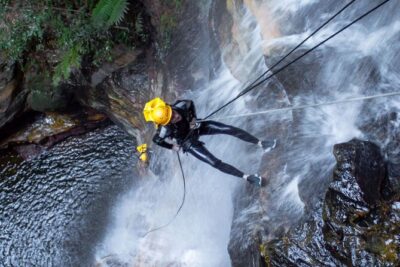
Full-Day Canyoning Experience at Stunning Empress Canyon
Read our review →
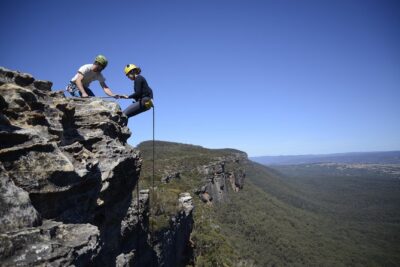
Half-Day Abseiling Adventure in Blue Mountains National Park
Read our review →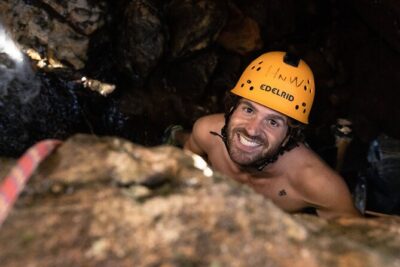
Juggler Canyon and Abseiling Adventure Blue Mountains
Read our review →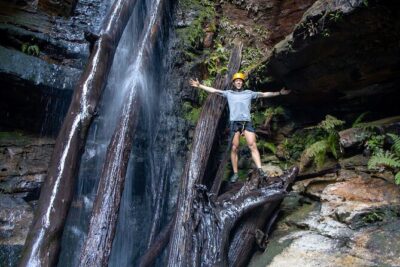
Small-Group Full-Day Rock Climbing Adventure from Katoomba
Read our review →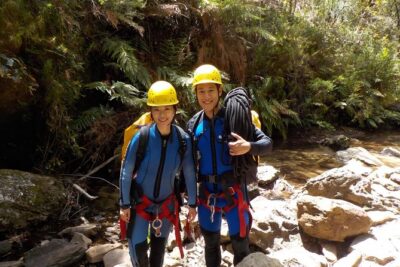
Canyoning at Twister and Rocky Creek: Two Canyons In One Day
Read our review →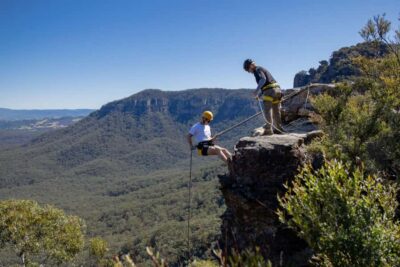
Browse the lists this tour appears in