
Reviewed · MUSEUMS
Sydney: Australian Museum RELICS Exhibition Entry Ticket
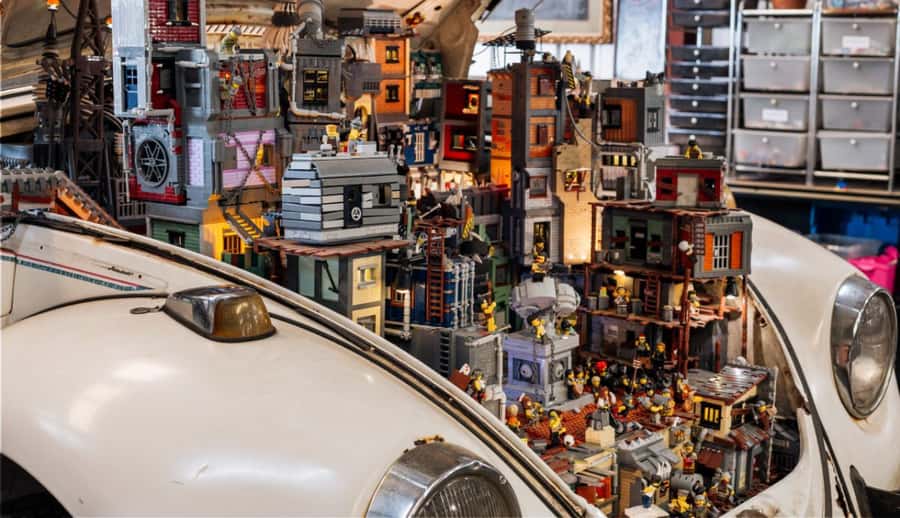
The clever idea behind RELICS: A New World Rises is simple: humans have left Earth, and small LEGO civilisations have claimed the objects we abandoned. Vintage radios, pianos, arcade machines, and suitcases become homes, cities, and story boxes in this playful exhibition at Sydney’s Australian Museum. I like the mix of nostalgia and environmental warning, and I like that the exhibition gives children something to do, not just something to look at.
The 14 displays were created by LEGO Masters winners Jackson Harvey and Alex Towler, with tiny scenes designed for close inspection. You can also build your own model and take part in separate scavenger hunts for children and adults. The main concern is crowding: school holidays can bring a lot of people, noise, and waiting time around the most popular displays.
In This Review
- Key points to know before you go
- A tiny civilisation inside a forgotten radio
- What the 14 displays are really asking you to notice
- A build space that changes the pace
- Scavenger hunts for children and adults
- How much time to allow
- Is the ticket good value?
- Planning around noise and school holidays
- Accessibility and family details
- How RELICS fits into a Sydney museum day
- Who should book RELICS?
- FAQ
- Where is RELICS: A New World Rises held?
- How long is the ticket valid?
- Can I enter at any time on my booked day?
- Who created the exhibition?
- How many displays are included?
- Is the exhibition suitable for children?
- Is there an activity area?
- Are scavenger hunts available?
- Is the exhibition wheelchair accessible?
- What should I bring for the audio description guide?
- Can I take photographs?
- Can I cancel my booking?
Key points to know before you go
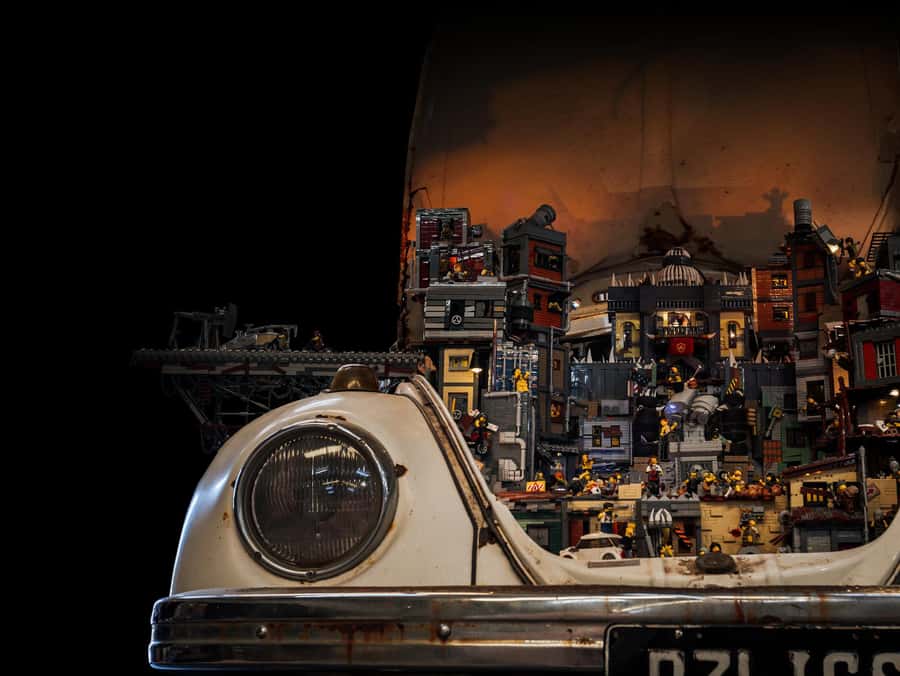
- Fourteen relics tell one future-Earth story: Each display places a LEGO civilisation inside an old object left behind by humans.
- Jackson Harvey and Alex Towler made the exhibition: The builders are known for detailed LEGO creations through LEGO Masters.
- The build space adds hands-on time: You can make a creation and place it on display instead of only viewing finished models.
- Two scavenger hunts suit different ages: Children and adults receive different versions, which helps keep the visit engaging for a family group.
- Holiday crowds can affect the visit: The exhibition itself is well made, but noise and limited viewing space may slow you down.
- The audio description guide is free: Bring a charged device and your own headphones to use it.
A tiny civilisation inside a forgotten radio
RELICS begins with a strong piece of storytelling. The exhibition imagines the year 2130, after people have used up Earth’s natural resources and abandoned the planet. LEGO communities have then grown inside the objects humans left behind.
That setup gives the exhibition more purpose than a room full of impressive models. You are not simply looking at bricks. You are looking at the remains of one civilisation through the eyes of another. A vintage radio becomes a place where a miniature society lives. An old suitcase becomes a container for a new world. An arcade machine, once built for human play, takes on a different role in this future.
The environmental theme is clear, but it is presented in a way that works for children. Young visitors can focus on the tiny characters and buildings, while older children and adults can think about the story behind the abandoned objects. The exhibition does not require you to understand a long scientific explanation before enjoying it.
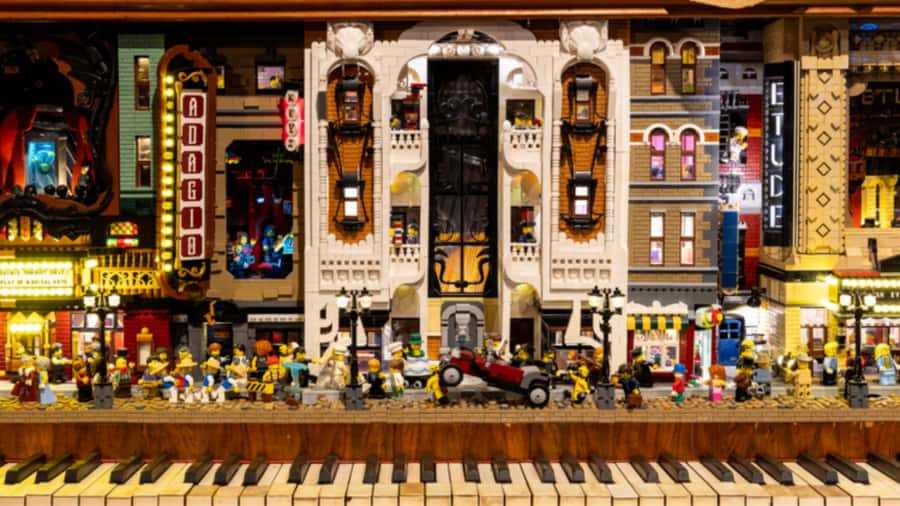
I particularly like the contrast between the familiar objects and the strange new life inside them. A piano is recognisable as a piano, yet its interior can hold a whole LEGO settlement. That contrast encourages you to look twice at each display and ask what part of the old object has been used by its new inhabitants.
More museums and galleries in Sydney:
- Sydney Cricket Ground (SCG) and Museum Walking Tour
★ 4.9 · 616 reviews - Australian National Maritime Museum Entry Ticket – Holiday Ticket
★ 4.5 · 140 reviews - Sydney Summer Art Exhibitions Art Gallery of New South Wales
★ 4.0 · 16 reviews
What the 14 displays are really asking you to notice
The number of displays is large enough to give the exhibition substance, but small enough that you can focus on individual scenes. Each relic combines a vintage object with an intricate LEGO world, so the visit works best when you slow down and inspect the details.
You might first notice the larger shape of a model, then spot smaller figures, vehicles, buildings, or objects tucked into the scene. This is where the exhibition rewards patience. A quick walk past the displays will give you the general idea, but a closer look reveals more of the miniature civilisation.
The old objects also create a useful link between past, present, and future. A radio or suitcase carries a sense of human memory. The LEGO settlement inside it suggests that objects can gain a new life after their original owners are gone. That is a thoughtful idea, even when the presentation feels light and playful.
The models were created by Jackson Harvey and Alex Towler, winners of LEGO Masters. Their authorship matters because the exhibition depends on precision. The pleasure is in the small decisions: how a community fits into an unusual container, how the figures are placed, and how the object itself becomes part of the story rather than just a display case.
If you are visiting with children, give them time to search for details instead of rushing them from one object to the next. If you are visiting without children, the same advice applies. The adult scavenger hunt gives you a reason to keep looking closely.
A build space that changes the pace
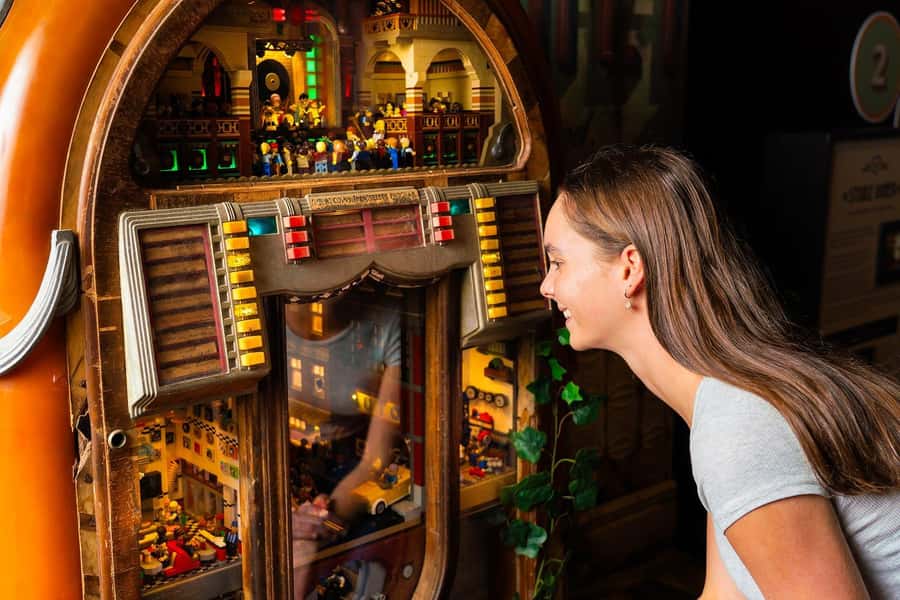
The interactive build area is one of the most useful parts of the visit. After studying finished models, you can sit down and make something of your own. You can then display your creation in the designated area.
This matters because LEGO exhibitions can become passive, especially for younger children. The build space breaks up the viewing time and lets children move from observing to making. It also gives adults a chance to help, experiment, or simply take a short pause while children work.
Do not expect the build area to turn the exhibition into a long workshop. The supplied information describes it as an interactive space where you can build and display your own work, rather than a guided class. Still, it adds useful hands-on time and makes the visit feel less like a one-way museum experience.
For families, this area may be the difference between a quick circuit and a satisfying visit. It gives children a clear activity to look forward to and a way to take part in the exhibition’s central idea: old things can become the basis for new worlds.
Scavenger hunts for children and adults
The custom scavenger hunt gives the exhibition a simple game structure. There are different versions for children and adults, so you can choose an activity that matches the group.
For children, a hunt can help with focus. Instead of seeing a room full of small details, they have specific things to find. That can make the objects easier to approach and can keep the visit moving at a comfortable pace.
The adult version is useful for a different reason. It encourages you to study the models rather than glance at them. The tiny scenes are designed to reward close looking, and a list of things to find gives you a clear reason to spend longer at each relic.
I would use the scavenger hunt early in the visit, especially if your group includes children who lose interest when displays are purely visual. You can then return to favourite models after the hunt and look at the wider story.
A few more Sydney half-days to weigh up
- Sydney: Opera House Guided Tour with Entrance Ticket
★ 4.8 · 8,312 reviews - All Inclusive Blue Mountain,Scenic World,Lunch,Koalas,ferry
★ 5.0 · 7,832 reviews - From Sydney: Blue Mountains Full-Day Trip
★ 4.5 · 4,471 reviews - Sydney Opera House Official Guided Walking Tour
★ 4.5 · 3,770 reviews
How much time to allow
The ticket is valid for one day, but that does not mean the exhibition itself takes a full day. The available information does not give a fixed visit length, so your timing will depend on how closely you inspect the models, use the scavenger hunt, and spend time in the build space.
The practical issue is crowding. During holiday periods, the displays can attract many people, and you may need extra time to reach the front of a viewing area. Noise can also make the experience less calm than the models suggest.
If you want to see the details without feeling rushed, allow more time than a quick look. The exhibition contains only 14 main displays, but each one is made for close viewing. A group with children may also spend longer at the build space.
The entry process itself is described as quick and uncomplicated, and you can enter at any time on the booked day. That flexibility helps if you are fitting RELICS between other Sydney plans. You do not need to treat the ticket as a fixed tour with a guide or a strict sequence.
Is the ticket good value?
Value depends on how much you want from a museum visit. If you are a LEGO fan, have children who enjoy building, or like imaginative science fiction, the exhibition offers more than a standard display of finished models. You get 14 themed scenes, a build space, scavenger hunts, and access to the wider Australian Museum setting.
If you are mainly looking for a large attraction that occupies many hours, the ticket may feel less worthwhile. The exhibition is focused, and the displays are compact worlds rather than huge galleries. One German booking review rated it three out of five and felt the price was not justified, which is a fair warning for adults who are only mildly interested in LEGO.
For families, the hands-on features improve the calculation. A child who spends time searching, building, and studying the figures may get much more from the ticket than someone who walks through once. The free audio description guide is another useful inclusion, though you must bring your own device and headphones.
The best way to judge the price is to ask whether you want a short, themed museum experience or a major all-day attraction. RELICS works better as a focused addition to a Sydney museum day than as the only activity you plan from morning to evening.
Planning around noise and school holidays
The exhibition can become crowded during school holidays. This is not just a minor inconvenience. Small LEGO scenes need clear sightlines, and several people gathered around one display can make it hard to see the details.
Noise is another consideration. One booking review specifically found the crowd and sound level frustrating, even while rating the exhibition and the small LEGO world highly for children. If your child is sensitive to noise or your group prefers a quiet museum visit, think carefully about when you go.
The flexible entry arrangement gives you some room to plan. You can enter at any time on the day of your booking, according to the supplied entry information. Check the available starting times when booking, then choose a time that fits your wider day.
Bring comfortable shoes because you may spend time standing while looking at the models. Bring a camera for personal photographs, although you should check at the museum for any restrictions. A charged smartphone is also useful for the audio description guide and for taking photos.
Accessibility and family details
The Australian Museum provides step-free access and accessible facilities. Prams and wheelchairs are welcome, so families with young children and visitors using mobility equipment can plan the visit with greater confidence.
The free audio description guide can support visitors who benefit from spoken detail. You need to bring your own device and headphones, and your phone should be charged before arrival. The supplied information does not state that headphones or devices are provided at the venue.
The environmental themes involve future Earth and resource depletion. They are handled in a playful, accessible way, but parents may still want to explain the basic idea to younger children. The subject is not simply about LEGO buildings. It also asks what happens when people use up resources and leave objects behind.
How RELICS fits into a Sydney museum day
The Australian Museum gives you a useful setting for this exhibition because RELICS connects old objects with questions about the future. You can make it part of a broader museum visit, then use the exhibition as a lighter, more playful section of the day.
I would not treat it like a guided tour. You set your own pace, enter on the booked day, and move through the displays independently. That makes it easy to combine with other Sydney activities, but it also means you need to guide your own visit.
The Australian Museum shop is worth leaving time for if you want a keepsake. It carries RELICS-themed souvenirs, LEGO gifts, and the exhibition book. The book may be especially useful if your child wants to continue looking at the models and ideas after leaving.
Photography for personal use is typically allowed in most exhibition spaces, but confirm the rules when you arrive. A camera can help you remember small details, though it will not replace seeing the models at close range.
Who should book RELICS?
I would recommend this ticket most strongly to families, LEGO fans, and adults who enjoy miniature construction and playful science fiction. Children have several ways to take part, through the scavenger hunt and build area, while adults can appreciate the design and environmental message.
It is also a good choice if you want a flexible museum activity rather than a fixed guided experience. You can enter during the booked day, move at your own pace, and decide how long to spend with each relic.
I would be more cautious if you expect a full-day attraction or dislike crowded viewing areas. The exhibition can be noisy and congested during holiday periods, and the compact displays may not feel like strong value if you have little interest in LEGO.
Book RELICS if the idea of tiny civilisations living inside discarded human objects sounds appealing. Go at a quieter time if possible, bring your phone and headphones, and allow enough time to build, search, and look closely. Skip it if you only want a quick pass through a major museum or if the ticket price feels high for a focused exhibition.
FAQ
Where is RELICS: A New World Rises held?
The exhibition is held at the Australian Museum in Sydney, New South Wales, Australia.
How long is the ticket valid?
The ticket is valid for one day. The exhibition does not provide a fixed visit length in the supplied information.
Can I enter at any time on my booked day?
GetYourGuide customers can enter at any time on the day of the booking, according to the supplied entry information. Check availability and starting times when you book.
Who created the exhibition?
RELICS: A New World Rises was created by LEGO Masters winners Jackson Harvey and Alex Towler.
How many displays are included?
The exhibition includes 14 displays combining vintage objects with detailed LEGO brick worlds.
Is the exhibition suitable for children?
Yes. It is designed for families and children, with a playful presentation of the future-Earth and resource-depletion themes.
Is there an activity area?
Yes. You can build your own LEGO creation in the interactive build space and place it on display.
Are scavenger hunts available?
Yes. There are custom scavenger hunts with separate versions for children and adults.
Is the exhibition wheelchair accessible?
Yes. The Australian Museum offers step-free access and accessible facilities. Prams and wheelchairs are welcome.
What should I bring for the audio description guide?
The audio description guide is free, but you must bring your own device and headphones. Bring a charged smartphone or other suitable device.
Can I take photographs?
Photography for personal use is typically allowed in most exhibition spaces. Check at the museum for any restrictions when you arrive.
Can I cancel my booking?
You can cancel up to 24 hours in advance for a full refund. The reserve-now-and-pay-later option lets you keep your plans flexible.
Just added around Sydney
- Sydney Eye Tower Admission Ticket★ 3.5 · 3 reviews
- Guided Snorkel Tour at Australias most iconic beach★ 5.0 · 3 reviews
- Uncover the Magic Gin Distillery Adventure at Millsheds Bowral★ 4.5 · 3 reviews
- Honey Farm Tour. Morning Tea. Guided Tasting★ 5.0 · 3 reviews
- Sydney Beaches Half Day Drive and Walk Tour★ 5.0 · 3 reviews
- Sunrise & Surf Beach Lifestyle Photoshoot★ 5.0 · 3 reviews
- Small Group Tour Sydney City Highlights and Hidden Gems★ 5.0 · 3 reviews
- Tour from Eden to Merimbula Wetlands Wildlife and Coastline★ 5.0 · 3 reviews
Museums, compared.

Australian National Maritime Museum Entry Ticket – Holiday Ticket
Read our review →
Sydney Summer Art Exhibitions Art Gallery of New South Wales
Read our review →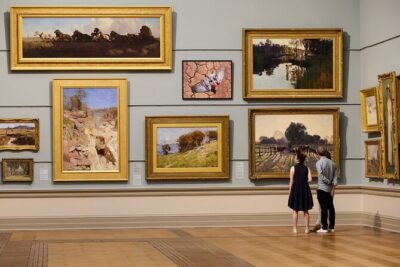
Tours & Exhibitions at Art Gallery of New South Wales
Read our review →
Tickets & Tours at Art Gallery of New South Wales
Read our review →Browse the lists this tour appears in