
Reviewed · SYDNEY OPERA HOUSE TOURS
Sydney Opera House Architectural Tour
The most fascinating part of this tour is learning how an idea that looked almost impossible became the Sydney Opera House. You follow the building from Jørn Utzon’s 1950s vision through difficult engineering, political fights, changing plans, and the work of many people who brought it to life. I especially like the technical detail and the chance to sit inside the Great Hall, two things a photo stop cannot provide.
The tour is short enough to fit neatly into a Sydney day, and guides such as Peter, who worked on the building’s interior, can explain its design from professional experience. The main drawback is physical: this is a walking tour with as many as 300 or more stairs, and late arrivals cannot join after departure.
In This Review
- Key points at a glance
- Why this Sydney Opera House tour feels different
- Following Utzon’s idea from sketch to harbour icon
- The engineering behind the famous roof
- The political and human story inside the building
- Seeing the interior, including the Great Hall
- A 1-hour-15-minute tour with plenty of walking
- Small groups, audio support, and guide quality
- Is the $43.03 price good value?
- Who should book this experience?
- Final verdict: book it for the story behind the sails
- FAQ
- Where does the Sydney Opera House Architectural Tour take place?
- How long does the tour last?
- What time does the tour start?
- How early should I arrive?
- What happens if I arrive late?
- How many stairs are involved?
- What is included in the price?
- Is the tour available by mobile ticket?
- Can I cancel for a refund?
Key points at a glance
- Jørn Utzon’s bold concept: See how a Danish architect helped change the image of Australia.
- Engineering explained clearly: Learn how the famous roof forms went from sketches to buildable structures.
- Politics and personality: The story includes professional conflict, public pressure, and changing plans.
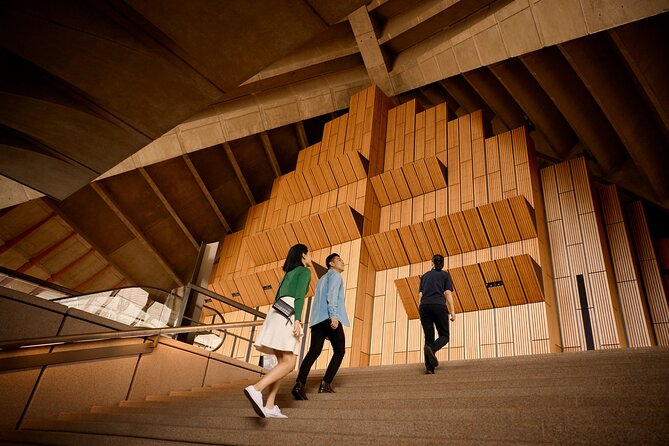
- Inside the building: The route includes interior spaces and the Great Hall, subject to venue access.
- Small advertised group: The maximum group size is nine, which should make explanations easier to follow.
- Plan for the stairs: You may climb 300 or more steps, so comfortable shoes matter.
Why this Sydney Opera House tour feels different
Many people see the Opera House first as a postcard image: white roof shells, blue harbour, and a dramatic place on the water. This tour changes your view. Instead of treating the building as a finished object, it presents it as a long argument between imagination and practical limits.
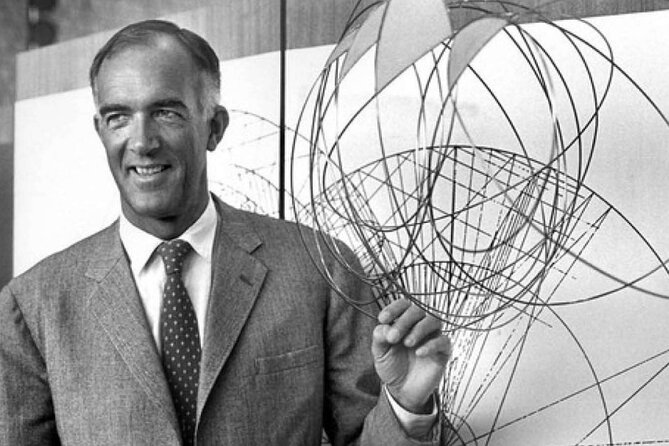
In the mid-1950s, Australia held a design competition for a major performing arts building. Jørn Utzon, a Danish architect, submitted a concept that captured the imagination of the judging panel. The design was daring because its sweeping roof forms looked more like sculpture than conventional architecture.
The tour explains how that concept moved from paper to construction. That process involved architects, engineers, builders, artists, politicians, and administrators. Some wanted to protect the original artistic idea. Others had to make the building safe, affordable, and possible to construct with the technology of the time.
That mix gives the experience its appeal. You are not simply told that the Opera House is beautiful. You learn why its beauty required so much hard work, compromise, and problem solving.
The tone is practical rather than purely ceremonial. You hear about materials, construction problems, professional disagreements, and the political pressures surrounding the project. If you enjoy architecture, this level of detail is the main reason to book. If you know little about architecture, the guide’s job is to connect the technical points to the human story.
More ways inside the Opera House:
- Sydney: Opera House Guided Tour with Entrance Ticket
★ 4.8 · 8,312 reviews - Sydney Opera House Official Guided Walking Tour
★ 4.5 · 3,770 reviews - Sydney: Sunrise Kayak, Opera House & Under Harbour Bridge
★ 5.0 · 869 reviews
Following Utzon’s idea from sketch to harbour icon
The tour begins at the Sydney Opera House, with admission included. The building itself is the subject, so there is no need for a separate attraction transfer or a long bus ride before the main event begins.
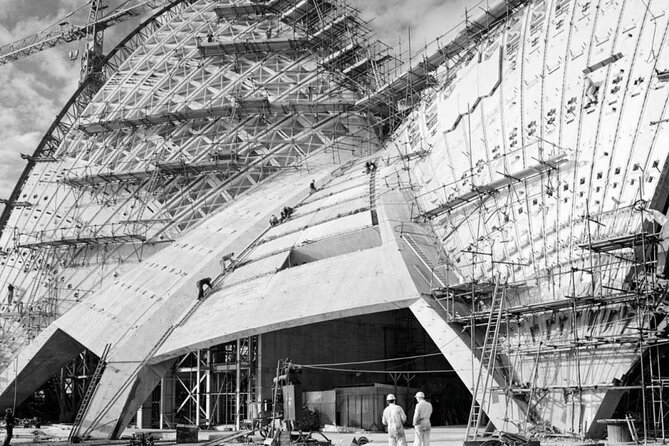
The first stage is the original design. Utzon’s proposal was not a normal box with decoration added later. The entire building was conceived as a sculptural form that would be seen from many angles around Sydney Harbour.
That idea created an immediate challenge. A roof can look elegant in a drawing but behave very differently when engineers must calculate its weight, strength, drainage, maintenance, and construction method. The tour helps you understand that the Opera House was at the cutting edge of what could be attempted at the time.
I find this especially useful because it gives meaning to the familiar roof shapes. You begin to see them not as separate shells placed on top of a building, but as part of a much larger design problem.
The guide also places the Opera House within Australia’s cultural ambitions. The project was intended to create a major performance venue, but it also became a statement about what the country wanted to be. The building helped change how Australia was seen abroad, which explains why its story reaches well beyond architecture.
The engineering behind the famous roof
The strongest part of the tour is likely to be the explanation of how the roof was made possible. You will hear about the difficult engineering questions that followed Utzon’s original concept and about the work needed to turn unusual forms into a real structure.
The exact technical depth depends on your guide, but the experience is built around the design and construction process. That makes it a good choice for anyone who wants more than dates and broad facts.
Some guides bring unusual professional insight. Peter is described as an architect who worked with Peter Hall, the designer responsible for much of the interior work. Another guide, also identified as a former architect involved with the Opera House, has explained the building from direct professional experience.
That background can make a real difference. An architect can point out why a certain choice mattered, where the hardest problems appeared, and how the final building differed from the early vision. You may also hear how materials are maintained and why preserving such a complicated structure remains an ongoing task.
The technical material is not only for architects. A good explanation lets you look at the roof, walls, and interiors with fresh eyes. You understand that every curve and junction had to be planned, tested, built, and maintained.
Still, this is not a hands-on engineering workshop. You are listening and walking, not examining construction drawings or entering work areas. If you want a highly technical session, the guide and group pace will shape how much detail you receive.
The political and human story inside the building
The Opera House project took years and became tangled in professional and political conflict. The tour addresses the controversy surrounding the original design, the construction period, and the decisions that shaped the finished building.
This part matters because the Opera House was not created by one person working alone. Utzon’s vision was central, but the completed building also reflects the work of engineers, interior designers, administrators, builders, and political leaders.
You may hear about the tension between artistic goals and practical demands. Large public projects have budgets, deadlines, safety requirements, and changing expectations. The Opera House made all of those pressures unusually visible because the design was so ambitious.
The story also gives you a more honest way to admire the building. It was not a smooth triumph from start to finish. It involved difficult choices and professional disagreements. Those complications make the final result more interesting, not less.
I would pay close attention when the guide discusses how the building changed during construction. That is where you see the difference between Utzon’s early concept and the Opera House that opened to the public. You also gain a better sense of how political and cultural needs influenced architectural decisions.
A few more Sydney half-days to weigh up
- All Inclusive Blue Mountain,Scenic World,Lunch,Koalas,ferry
★ 5.0 · 7,832 reviews - From Sydney: Blue Mountains Full-Day Trip
★ 4.5 · 4,471 reviews - Blue Mountains Small-Group Tour from Sydney with Scenic World,Sydney Zoo & Ferry
★ 5.0 · 3,709 reviews - Blue Mountain Small Group Scenic World, Wildlife, Waterfall
★ 4.8 · 3,428 reviews
Seeing the interior, including the Great Hall
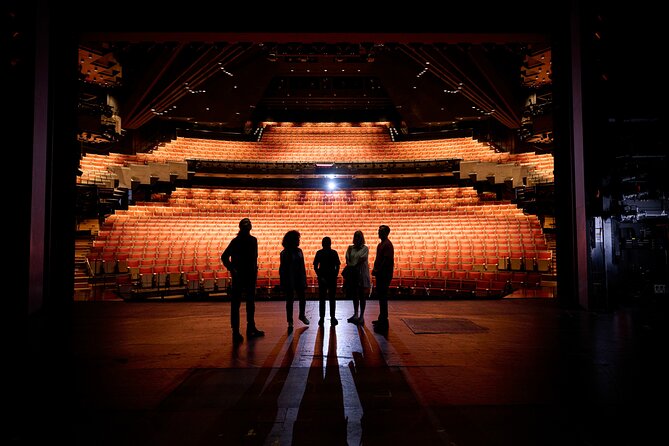
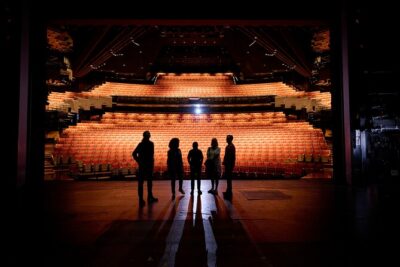
The experience includes both outside and inside views of the Opera House, although access to particular venue areas depends on availability at the time of the tour. That condition is worth noting. The Opera House is a working performance venue, so the exact interior route can change before departure.
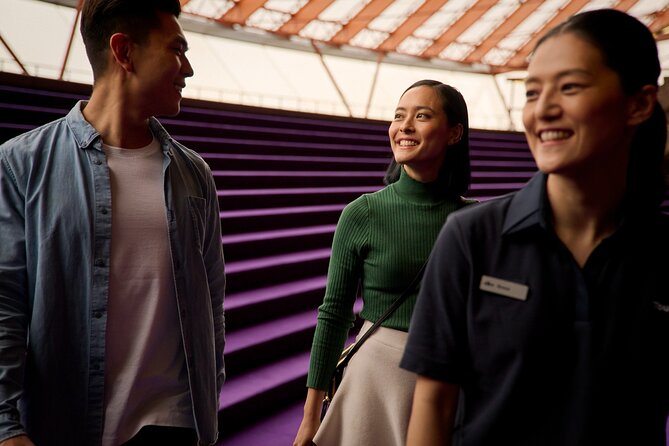
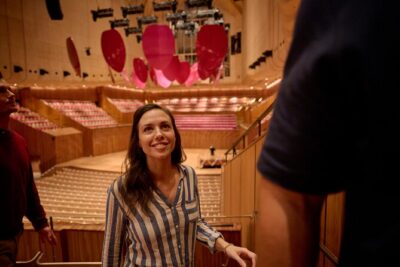
One memorable element is time spent sitting in the Great Hall. This gives the tour a welcome pause after the walking and allows you to experience one of the building’s major performance spaces rather than simply passing through it.
The interior is important because the Opera House was designed for use, not only for appearance. The tour explains how the building’s inner spaces relate to performance, acoustics, movement, and the needs of audiences and artists.
You will not simply be shown a famous room and sent on your way. The guide connects the interior to the larger construction story. The result is a better understanding of how the building’s dramatic exterior had to support complicated functions inside.
Photography is part of the appeal for many people, and the route offers opportunities to take pictures. Still, do not let your camera become the main event. The building’s details make more sense after you hear why they exist.
A 1-hour-15-minute tour with plenty of walking
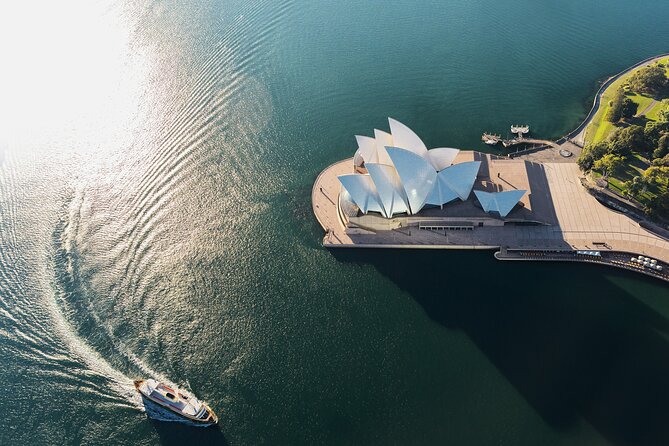
The stated duration is about 1 hour and 15 minutes. That is long enough to cover the building’s origins, design, engineering, political story, and interior use without taking over your entire day in Sydney.
The pace is active. This is a walking tour, and the route can include 300 or more stairs. Comfortable shoes are a sensible choice, and you should think carefully about the stair count if you have mobility concerns.
The tour is not described as fully accessible, and the stair warning should be taken seriously. Most people can participate, but the number of steps may make this a poor fit for anyone who needs a route with minimal climbing.
You must arrive at the Welcome Centre 15 minutes before the 10:00 am start. This allows time for check-in and cloaking procedures. If you are more than five minutes late after the scheduled departure, you forfeit the tour, so do not plan to arrive at the Opera House at the last moment.
The venue is near public transportation, making the Opera House easy to reach within Sydney. You still need to allow extra time for finding the Welcome Centre, walking through the precinct, and completing the required pre-tour procedures.
Small groups, audio support, and guide quality
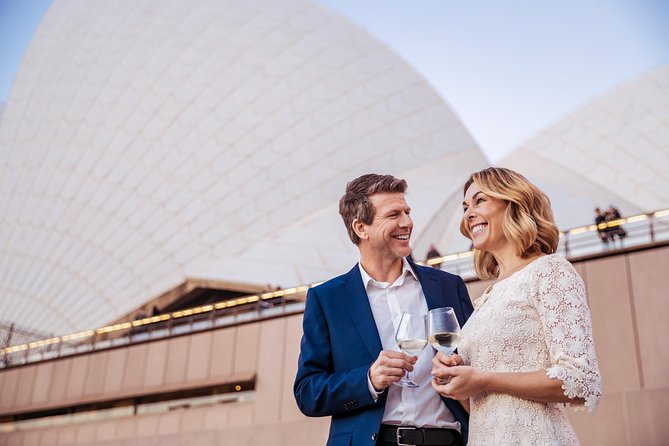
The advertised maximum is nine people, a useful feature for an experience built around explanation and questions. A small group should make it easier to hear the guide and stay close during the walking sections.
Guide quality is especially important here. The most praised guides are Peter and Gaston, with Peter receiving particular attention for his background in the Opera House project and his ability to make the technical story entertaining.
A good guide must do more than recite construction dates. The best version of this tour links the roof geometry to engineering, then connects engineering to politics and culture. It should leave you with a clear story rather than a pile of disconnected facts.
Headsets have also been used on the tour, helping people hear the guide when standing toward the back of a group. This is useful in large or noisy spaces and for anyone with hearing difficulties. The listed group limit is nine, but group conditions can still affect how personal the experience feels.
One point to keep in mind is that the format may not always allow long stops for questions. If you want a relaxed discussion at every stage, you may find the scheduled pace restrictive. You can still ask questions when the guide allows time, but the tour has a fixed route and departure schedule.
Is the $43.03 price good value?
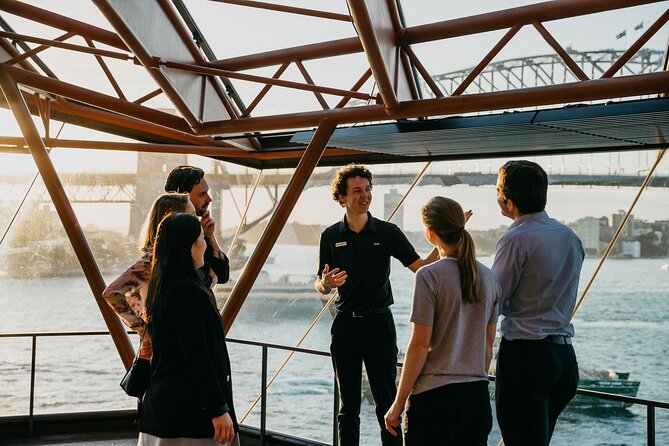
At $43.03 per person, this is not the cheapest way to see the Opera House exterior. You can admire the building from the harbour, forecourt, or nearby streets without paying anything.
The price makes more sense if you want access inside and a guided explanation of how the building came into being. You are paying for the guide’s interpretation, the included admission, and the chance to connect the design, engineering, interiors, and politics in one short visit.
The value is strongest for architecture fans, students, design professionals, and curious visitors who want to understand why the Opera House became such an important building. It also suits anyone who has already photographed the exterior and wants a second look with more meaning.
If your main goal is a quick photo and harbour view, skip the tour and spend the money elsewhere. If you want the building to make more sense, the cost is reasonable for a focused 75-minute experience.
The 96 percent recommendation rate and 4.8 rating from 73 ratings suggest that the tour delivers well for its intended audience. The most consistent praise centers on the guides, the clear explanation of construction, and the unusual chance to learn from people with architectural experience.
Who should book this experience?
I would book this tour if you enjoy buildings, design, engineering, or stories about how public projects actually get made. You do not need to be an architect. The guide’s role is to explain the difficult ideas in a way that connects them to what you can see.
It is also a strong choice for repeat visitors to Sydney. The Opera House is easy to recognize, but its design has enough layers to reward a closer look.
Families with older children may find the story engaging, especially if they enjoy construction and unusual buildings. The stair count and 75-minute walking format are the main points to consider before booking.
You may prefer another Opera House visit if you want a performance, a leisurely meal, or a short photo session. This experience is about the building’s creation, not a full evening of entertainment.
Free cancellation is available if you cancel at least 24 hours before the start time. Changes or cancellations made later are not refunded, and late arrival causes the booking to be forfeited.
Final verdict: book it for the story behind the sails
The Sydney Opera House Architectural Tour is worth booking when you want to understand more than the building’s famous outline. It gives you the design story, the engineering difficulties, the political conflict, and the interior purpose in one compact visit.
The biggest strengths are the expert guides, the technical explanation, and the chance to sit in the Great Hall. The main cautions are the 300-plus stairs, the strict arrival rule, and the possibility that interior access may change.
Book it early in your Sydney plans, arrive at the Welcome Centre 15 minutes ahead, and wear shoes suited to stairs. If you do, you will leave with a sharper eye for the roof forms and a much better sense of why this building changed modern architecture.
FAQ
Where does the Sydney Opera House Architectural Tour take place?
The tour takes place at the Sydney Opera House in Sydney, Australia. The route includes areas inside and outside the building, subject to venue access at the time of your tour.
How long does the tour last?
The tour lasts approximately 1 hour and 15 minutes.
What time does the tour start?
The stated start time is 10:00 am.
How early should I arrive?
You should arrive at the Welcome Centre 15 minutes before the tour begins for check-in and cloaking procedures.
What happens if I arrive late?
If you are more than five minutes late after the tour start time, you cannot join and the tour will be forfeited.
How many stairs are involved?
The walking tour can include 300 or more stairs.
What is included in the price?
A guided tour and admission ticket are included.
Is the tour available by mobile ticket?
Yes. The experience includes a mobile ticket.
Can I cancel for a refund?
Yes. You can cancel at least 24 hours before the experience start time for a full refund. Cancellations or changes made less than 24 hours before departure are not accepted for a refund.
Just added around Sydney
- Sydney Eye Tower Admission Ticket★ 3.5 · 3 reviews
- Uncover the Magic Gin Distillery Adventure at Millsheds Bowral★ 4.5 · 3 reviews
- Guided Snorkel Tour at Australias most iconic beach★ 5.0 · 3 reviews
- Sunrise & Surf Beach Lifestyle Photoshoot★ 5.0 · 3 reviews
- Honey Farm Tour. Morning Tea. Guided Tasting★ 5.0 · 3 reviews
- Sydney Beaches Half Day Drive and Walk Tour★ 5.0 · 3 reviews
- Tour from Eden to Merimbula Wetlands Wildlife and Coastline★ 5.0 · 3 reviews
- From Sydney Blue Mountains Private Tour with Wildlife Park★ 3.5 · 3 reviews
Sydney Opera House Tours, compared.
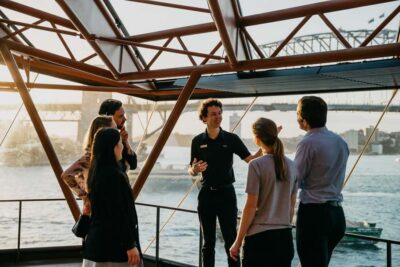
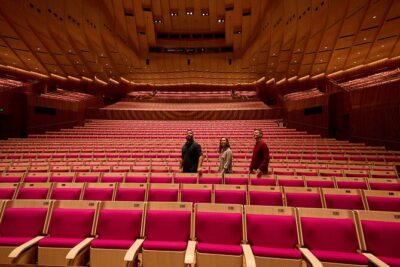
Sydney Opera House Official Guided Walking Tour
Read our review →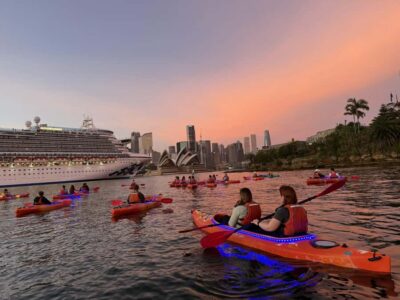
Sunrise Kayak, Opera House & Under Harbour Bridge
Read our review →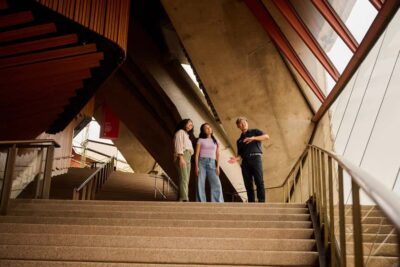
Sydney Opera House Backstage Guided Tour with Breakfast
Read our review →
Sydney Shore Excursion: Sydney Opera House Walking Tour
Read our review →Browse the lists this tour appears in