
Reviewed · WALKING TOURS
Sydney Queer Walking Tour
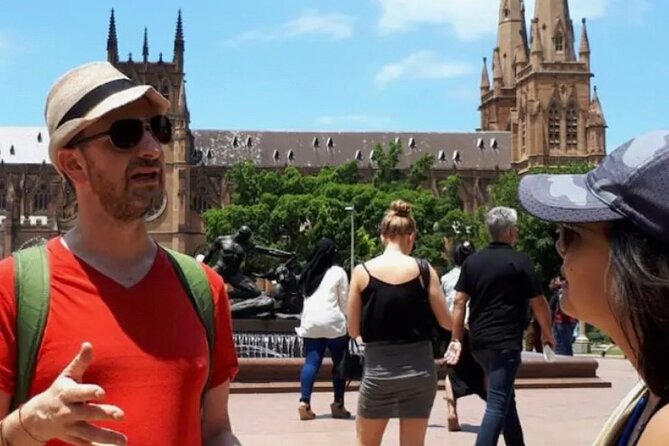
Sydney’s queer past is written into ordinary streets, squares, fountains, and meeting places. This two-hour walk connects those places, starting near the Law Courts and finishing at Taylor Square, the symbolic heart of gay Sydney.
I like the clear time line, from Indigenous ideas about gender and sexuality through colonial-era stories and the social reforms of the 1970s. I also like the small group limit of 12 people, which should make it easier to hear the guide and ask questions. The main consideration is that this is a serious history walk, not a sightseeing tour built around grand attractions.
In This Review
- Key points to know before you book
- Why this Sydney queer history walk matters
- Starting at the Law Courts and Archibald Fountain
- Whitlam Square and the change of the 1970s
- Darlinghurst backstreets, Green Park, and the HIV years
- Kinselas Hotel and the first Mardi Gras
- What the guide adds to the experience
- Is $53.79 a fair price?
- Who will enjoy this tour most?
- Practical details for your morning
- Should you book the Sydney Queer Walking Tour?
- FAQ
- How long does the Sydney Queer Walking Tour last?
- Where does the tour start?
- Where does the tour finish?
- What time does the tour start?
- How many people can join the tour?
- Can I cancel for a full refund?
Key points to know before you book
- Four focused stops: Each location receives about 30 minutes, so the tour has a steady pace rather than a rushed list of landmarks.
- A walk through queer Sydney: The route links the Archibald Memorial Fountain, Whitlam Square, Green Park, and Kinselas Hotel at Taylor Square.
- History from many periods: Topics include Indigenous Australian perspectives, colonial and early 20th-century lives, 1970s gay rights, Mardi Gras, and the HIV epidemic.
- Small morning group: The 9:30 am walk accepts a maximum of 12 people, making it a more personal experience.
- Coffee or tea along the route: A stop at a local café is included in the walking plan, though the supplied details do not say that a drink is included in the price.
- Flexible booking: The mobile ticket includes free cancellation up to 24 hours before the start time.
Why this Sydney queer history walk matters
Many city tours point out famous buildings. This one asks you to notice what official histories often leave out: people whose relationships, identities, and public lives were hidden, punished, or pushed aside.
That gives the walk a different purpose. The Archibald Memorial Fountain is not simply a decorative starting point. It becomes a place to consider how queer stories can exist around a well-known civic landmark without being clearly marked on a plaque.
The route then moves toward the 1970s, when claims for fairness and equality reached the wider public. From there, the tour follows the links between protest, media attention, nightlife, political change, and the first Mardi Gras in 1978.
I value this broad view. You are not given a single story of progress. Instead, the walk covers Indigenous understandings of diverse sexual orientation and gender, difficult colonial and early 20th-century circumstances, social change, celebration, and the painful years of the HIV epidemic.
That mix makes the experience useful for anyone who knows Sydney’s modern queer scene but wants to understand how it developed. It also suits visitors who prefer local social history to a standard list of monuments.
More walking tours in Sydney:
- Sydney Opera House Official Guided Walking Tour
★ 4.5 · 3,770 reviews - Sydney The Rocks Guided Walking Tour
★ 5.0 · 1,546 reviews - Sydney: The Rocks 90-Minute History Walking Tour
★ 4.7 · 1,092 reviews
Starting at the Law Courts and Archibald Fountain
Meet at the Law Courts Library at 184 Phillip Street at 9:30 am. The first listed stop is the Archibald Memorial Fountain, where you begin looking backward from the modern city toward earlier and less visible queer stories.
This opening section covers the period from colonial times into the 1970s. It also introduces what is known about Indigenous Australia’s views on varied sexual orientation and gender. That subject is important because it places queer history in Australia before the colonial period, rather than treating it as something that began with modern rights campaigns.
The fountain gives the guide a useful setting for discussing how public places can carry private or overlooked stories. You will not simply hear names and dates. The point is to consider who gets remembered, who is left out, and why queer lives were often difficult to record.
Allow about 30 minutes here. Since admission is free at every stop, your ticket pays for the guided interpretation and the route between sites, not entry into a paid attraction.
One practical note: the meeting point and the first stop are listed separately. Check the exact directions when you book so you know where to gather at 9:30 am and how the group moves to the fountain.
Whitlam Square and the change of the 1970s
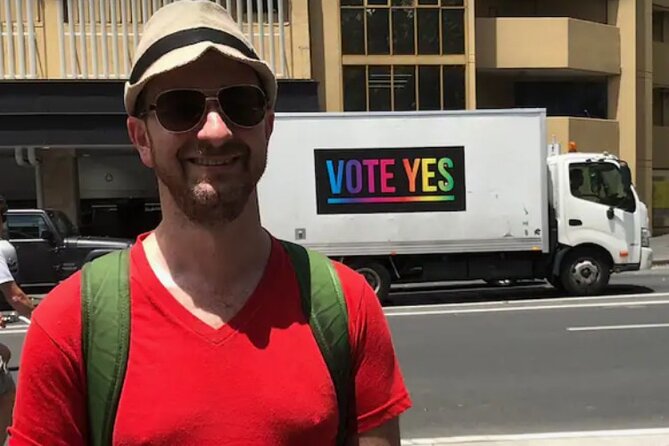
The second stop is the Emden Gun at Whitlam Square. Here the focus shifts to the 1970s, when gay rights campaigns began pressing more openly for fairness and equality.
The subject is not treated as a simple march toward acceptance. The tour also examines the role of the media and the way public attention shaped the movement. That context matters because social reform rarely happens through private conversations alone. Public claims, reporting, protest, and political pressure all affect what a city is willing to discuss.
This section should appeal to you if you want more than a party-history version of Sydney. The 1970s were a period of social upheaval, and the walk places queer activism within that wider change.
The Emden Gun also provides a physical pause in the route. Each stop lasts around 30 minutes, so you have time to listen instead of trying to absorb a long talk while walking. The group size, capped at 12, is another advantage here. A small circle is better suited to questions about language, politics, and the different strands of the movement.
The tour does not appear to promise a museum display or indoor presentation at this point. You should be prepared to stand outdoors and follow the guide’s account at the site itself.
Darlinghurst backstreets, Green Park, and the HIV years
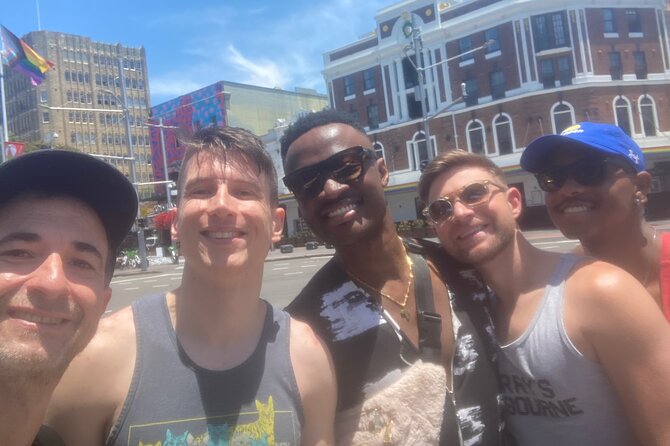
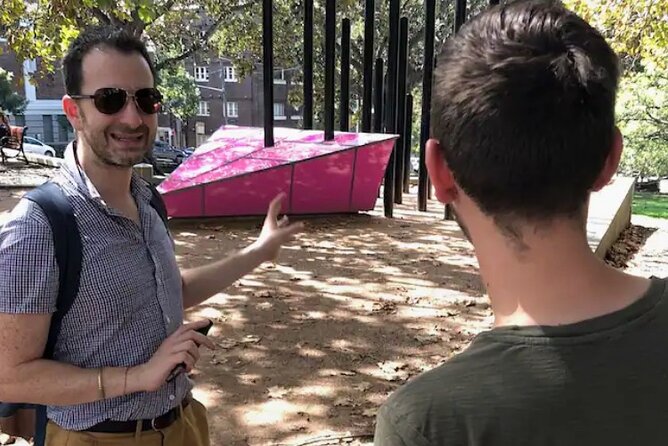
After Whitlam Square, the route winds through Darlinghurst’s backstreets toward Green Park. This is where the walk connects social history to the local streetscape.
A coffee or tea stop at a local café is built into this part of the route. That is a welcome touch during a two-hour morning walk, though you should not assume the drink is covered by the $53.79 ticket. The details describe the stop, but do not say that refreshments are included.
Green Park is used to discuss how Sydney handled the HIV epidemic. This is likely to be the most emotionally serious section of the experience. The subject involves public fear, health, grief, activism, and the work required to support a community during a crisis.
I appreciate that the tour gives this period its own place rather than adding it as a footnote to Mardi Gras. Sydney’s queer story is not only about celebration and visibility. It also includes the practical and human cost of the epidemic, along with the ways people responded.
The backstreet route should help you see Darlinghurst as more than a nightlife district. At the same time, this remains a short walking tour, so the guide can introduce the topic and its local meaning but cannot cover every organization, person, or event in detail.
If you prefer light entertainment, this portion may feel heavy. That is not a flaw, but it is worth knowing before you book. The walk deals with loss and public health as well as pride and progress.
A few more Sydney half-days to weigh up
- Sydney: Opera House Guided Tour with Entrance Ticket
★ 4.8 · 8,312 reviews - All Inclusive Blue Mountain,Scenic World,Lunch,Koalas,ferry
★ 5.0 · 7,832 reviews - From Sydney: Blue Mountains Full-Day Trip
★ 4.5 · 4,471 reviews - Blue Mountains Small-Group Tour from Sydney with Scenic World,Sydney Zoo & Ferry
★ 5.0 · 3,709 reviews
Kinselas Hotel and the first Mardi Gras
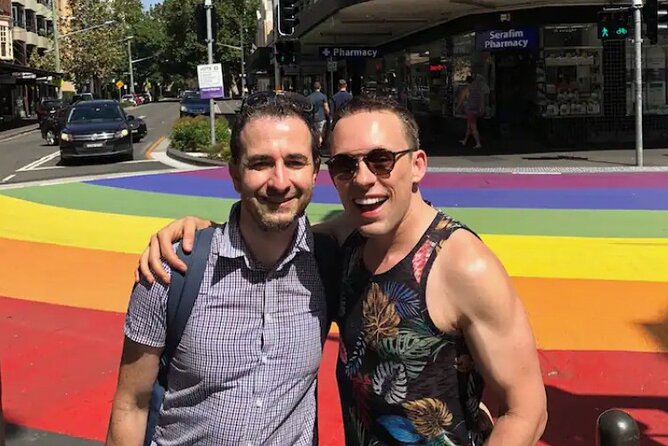
The final stop is Kinselas Hotel at Taylors Square, near Oxford Street and the intersection with Bourke Street. The tour uses this location to discuss what happened in June 1978 at the first Mardi Gras.
This is the strongest closing point because Taylor Square remains closely tied to queer Sydney. The guide explains why that first event still matters and how protest, partying, and political action became linked over the decades that followed.
Mardi Gras can be easy to reduce to costumes, music, and a famous parade. The walk gives it a longer frame. You consider the protest behind the celebration, the risks involved in making demands in public, and the way the event continued to carry political meaning as it became internationally known.
The final section also looks at how the area has changed. That gives you a chance to compare the remembered past with the present-day gay center around Oxford Street.
The listed end point is Sydney Sustainable Markets at Taylor Square. The walk does not return to its starting point, so plan the rest of your morning from Darlinghurst rather than the Law Courts area.
What the guide adds to the experience
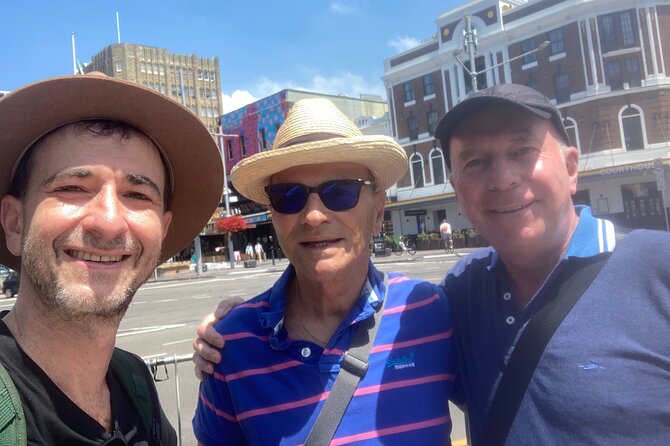
A history walk depends heavily on the person leading it. The available feedback names Michael and describes a lively, informative presentation that kept the group engaged throughout the two hours.
That is useful information for a tour built around stories rather than admission tickets. A guide must handle several kinds of material, from Indigenous perspectives and colonial records to political protest and the HIV epidemic. Clear storytelling matters as much as factual detail.
You can expect the guide to move between prominent queer citizens, public events, and the places connected with them. The format should leave room for questions, especially with no more than 12 people in the group.
The tour’s structure also helps. Four equal sections give the morning a simple rhythm:
- About 30 minutes at the Archibald Memorial Fountain
- About 30 minutes at the Emden Gun in Whitlam Square
- About 30 minutes around Green Park, with a café stop
- About 30 minutes at Kinselas Hotel and Taylor Square
That balance means no single subject takes over the whole walk. It also means the experience can cover a lot of ground in a short time, so you may want to note down names or return to certain places later.
Is $53.79 a fair price?
At $53.79 per person, this is not the cheapest way to spend two hours in Sydney. You can walk through Darlinghurst and Taylor Square without paying an admission fee.
The value comes from the guide’s research, the connections between places, and the care needed to explain queer history in context. You are paying for a planned route and a focused story, not for access to a building or a special view.
The price makes more sense if you enjoy social history, want to understand Sydney beyond its usual sights, or have limited time and prefer a guide to organize the subject for you. It is less compelling if you are mainly looking for nightlife recommendations, a general city orientation, or a parade-related photo walk.
The small group helps the value. A maximum of 12 people is more intimate than a large coach-style tour, and the subject benefits from a setting where you can listen and ask questions.
There are also no separate admission costs at the four stops. Keep a little extra money available for the café stop, since the supplied details do not confirm that coffee or tea is included.
Who will enjoy this tour most?
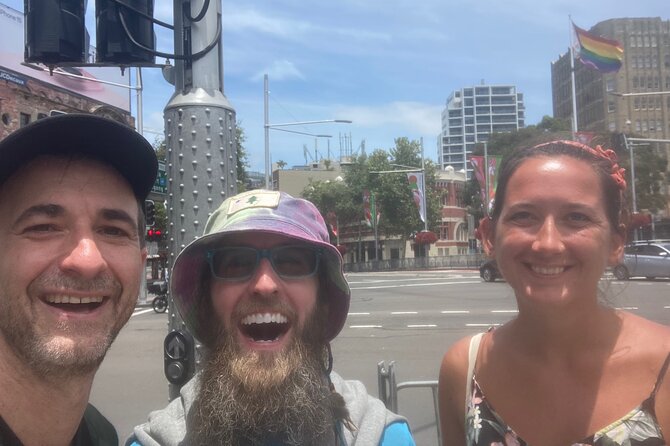
I would recommend this walk to you if you have an interest in:
- LGBTQIA+ history and civil rights
- Sydney’s social and political past
- The origins and meaning of Mardi Gras
- Darlinghurst and Oxford Street beyond their present-day nightlife
- Small-group walking tours with a local guide
- The connection between public places and overlooked personal stories
It is also a good choice for visitors who have already seen Sydney’s major sights and want a more specific subject. The route gives familiar parts of the city a new meaning.
Families and younger participants may be able to join, since most travelers can participate and service animals are allowed. Still, the material includes colonial discrimination, protest, and HIV, so consider whether the subject suits your group.
The tour runs in the morning and lasts about two hours. It is near public transportation, starts at 9:30 am, and finishes at Taylor Square. Those details make it easy to fit before lunch or another Darlinghurst activity.
Practical details for your morning
Bring a mobile ticket and arrive with enough time to find the Law Courts Library at 184 Phillip Street. The route ends at Sydney Sustainable Markets at Taylor Square, not back at the starting point.
Wear comfortable shoes suitable for city walking. The information provided does not specify the exact distance or terrain, so you should not assume the walk is entirely level or indoors. You will spend time at outdoor public places.
The group limit is 12 people. Confirmation arrives when you book, and free cancellation is available if you cancel at least 24 hours before the start time. Changes or cancellations made inside that 24-hour window are not accepted for a refund.
The tour has a five-star rating based on six ratings, with Michael receiving particular praise for keeping the presentation engaging. That is a positive sign, but the sample is small, so I would judge the experience mainly by its subject and format rather than by the rating alone.
Should you book the Sydney Queer Walking Tour?
Book it if you want a thoughtful, place-based account of Sydney’s queer past, especially if Mardi Gras, activism, and the HIV years interest you. The walk’s best feature is its scope: it begins with Indigenous perspectives and overlooked earlier lives, then follows the road toward modern visibility at Taylor Square.
I also like the fact that it does not treat queer Sydney as a single party district. The route includes civic spaces, protest history, public health, local cafés, and the continuing meaning of Oxford Street.
Skip it if you want a relaxed sightseeing stroll with little discussion of difficult subjects. At $53.79, the tour needs to earn its price through the guide and the stories, not through attractions you could not visit on your own.
For the right audience, this is a focused and worthwhile way to spend a morning. You leave at Taylor Square with a better sense of why the area matters, and why the first Mardi Gras still carries more than one meaning.
FAQ
How long does the Sydney Queer Walking Tour last?
The tour lasts approximately two hours.
Where does the tour start?
It starts at the Law Courts Library, 184 Phillip Street, Sydney NSW 2000.
Where does the tour finish?
It finishes at Sydney Sustainable Markets at Taylor Square, Oxford Street, at the intersection with Bourke Street in Darlinghurst.
What time does the tour start?
The scheduled start time is 9:30 am.
How many people can join the tour?
The tour has a maximum group size of 12 people.
Can I cancel for a full refund?
Yes. You can cancel for a full refund if you do so at least 24 hours before the experience start time. Cancellations or changes made less than 24 hours before the start are not accepted for a refund.
Just added around Sydney
- Sydney Eye Tower Admission Ticket★ 3.5 · 3 reviews
- Uncover the Magic Gin Distillery Adventure at Millsheds Bowral★ 4.5 · 3 reviews
- Guided Snorkel Tour at Australias most iconic beach★ 5.0 · 3 reviews
- Sunrise & Surf Beach Lifestyle Photoshoot★ 5.0 · 3 reviews
- Honey Farm Tour. Morning Tea. Guided Tasting★ 5.0 · 3 reviews
- Sydney Beaches Half Day Drive and Walk Tour★ 5.0 · 3 reviews
- Tour from Eden to Merimbula Wetlands Wildlife and Coastline★ 5.0 · 3 reviews
- From Sydney Blue Mountains Private Tour with Wildlife Park★ 3.5 · 3 reviews
Walking Tours, compared.
Sydney Opera House Official Guided Walking Tour
Read our review →
Behind The Scenes: Sydney Cricket Ground (SCG) Guided Walking Tour
Read our review →
Ultimate Sydney Walking Tour (Small-Group, Drink Included)
Read our review →
Convicts and The Rocks: Sydney’s Walking Tour Led by Historian
Read our review →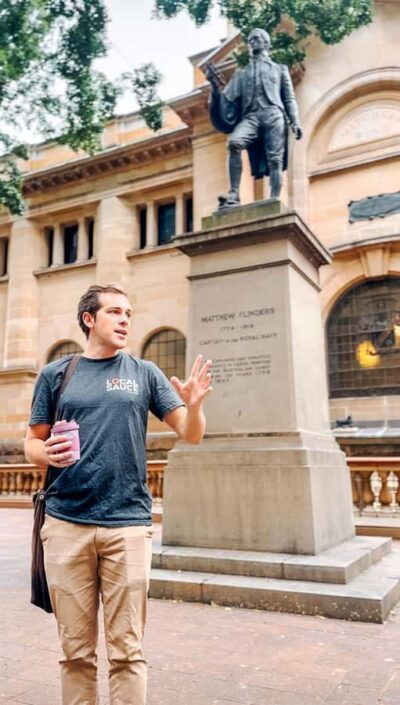
City & The Rocks 3.5-Hour Walking Tour with a Drink
Read our review →Browse the lists this tour appears in