
Reviewed · WILDLIFE & ZOO EXPERIENCES
Sydney Wildlife Safari
The best part of this day is its range. You might watch kangaroos and wallabies in open country, scan trees for parrots and kookaburras, then crouch beside a quiet river at dusk searching for a wild platypus. The platypus search gives the outing its special edge, since this is a real wildlife encounter, not a guaranteed zoo display.
I like the small maximum group of eight and the fact that the guide supplies binoculars, wildlife books and handheld spotlights. I also like the mix of places: private farmland, bushland and river edges, followed by a proper country pub dinner. The main drawback is the long day and uneven walking. You need to handle steep, rough or slippery trails and walk about 1 kilometre at a time.
In This Review
- Key points at a glance
- Leaving Sydney for the Southern Highlands
- Bowral, lunch and the first signs of wildlife
- Private farmland and bushland wildlife
- Why the Great Western Wildlife Corridor matters
- The dusk wait for a wild platypus
- Dinner at Australia’s oldest licensed inn
- Spotlighting wombats, possums and Tawny Frogmouths
- What the $304.83 price includes
- Walking, clothing and practical limits
- Who will enjoy this wildlife day most?
- Booking timing and cancellation risk
- Should you book the Sydney Wildlife Safari?
- FAQ
- Where does the Sydney Wildlife Safari start?
- What time does the tour begin?
- Where does the tour finish?
- How long does the experience last?
- How far is the Southern Highlands from Sydney?
- What animals might I see?
- Is a platypus sighting guaranteed?
- What meals are included?
- What should I wear?
- How many people can join the tour?
- Is the activity suitable for people with limited mobility?
- What happens if bad weather cancels the experience?
- Can I cancel for a refund?
Key points at a glance
- Wild platypus at dusk: Search a quiet river when these shy animals are most likely to appear.
- More than kangaroos: The route can produce wallabies, wombats, emus, possums, parrots, kookaburras and Tawny Frogmouths.
- Small group of eight: A compact group makes it easier to hear the guide and share sightings.
- Great Western Wildlife Corridor: Learn how this habitat link connects the southern Blue Mountains with Morton National Park.
- Lunch and pub dinner included: The day includes a light lunch, then a country-style meal with one alcoholic or non-alcoholic drink.
- Night wildlife spotting: After dinner, use supplied spotlights to look for wombats, possums and nocturnal birds.
Leaving Sydney for the Southern Highlands
You meet the guide at the Sydney Harbour Marriott Hotel at Circular Quay at noon. That central starting point is useful if you are staying in the city, and the activity ends back there after the wildlife work is finished.
The drive south takes about 90 minutes and leads to Bowral, one of the better-known towns in the Southern Highlands. This transfer is not wasted time. The guide uses it to explain which animals you may see, which ones are less likely, and how sightings are recorded.
That last point matters. Wildlife watching works better when you know what to look for. A wallaby may blend into scrub, a wombat may leave only tracks or a burrow, and a Tawny Frogmouth can look remarkably like part of a tree. The guide helps turn a casual ride through the countryside into a search with some purpose.
The group is capped at eight people, which is a strong advantage for this type of outing. Small groups are quieter, easier to move through narrow paths and less likely to scatter an animal before everyone gets a look. Guides Steve and Emma are named in the experience details, and both are associated with the strong wildlife focus of the day.
More koala, kangaroo and zoo visits near Sydney:
- All Inclusive Blue Mountain,Scenic World,Lunch,Koalas,ferry
★ 5.0 · 7,832 reviews - Blue Mountains Small-Group Tour from Sydney with Scenic World,Sydney Zoo & Ferry
★ 5.0 · 3,709 reviews - Blue Mountain Small Group Scenic World, Wildlife, Waterfall
★ 4.8 · 3,428 reviews
Bowral, lunch and the first signs of wildlife
After reaching Bowral, you have a light lunch, such as gourmet wraps. This is practical rather than elaborate, but it keeps the day moving. You are not stopping for a long restaurant meal before the main wildlife work begins.
The guide also introduces local conservation projects and monitoring programs. You learn to read the country through tracks, movement and habitat. This adds value because the day is not only about collecting a list of animals. You get some insight into how local groups watch and protect them.
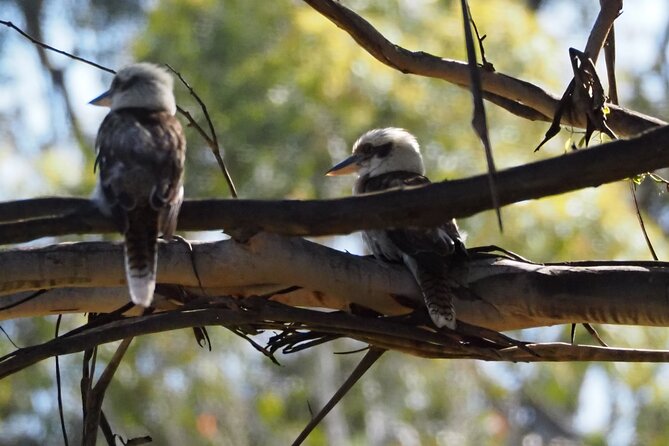
The Southern Highlands can produce a wide mix of birds. Kookaburras are among the likely highlights, while parrots may flash through the trees. The exact sightings will depend on weather, timing and luck, so you should arrive with the right attitude. A wildlife safari cannot promise a neat parade of animals on demand.
Still, the range here is impressive. The area can produce kangaroos, wallabies and emus, along with smaller creatures that are easier to miss. Your guide’s job is to slow the group down, point out signs and choose the right places to pause.
Private farmland and bushland wildlife
Much of the afternoon is spent moving between several wildlife sites on private farmland and untouched bushland. This gives you a look at open Australian country beyond the city and beyond the standard wildlife park visit.
Private access is important. It can take you to quieter ground than a public attraction, where the group has a better chance of seeing animals behaving naturally. You are not promised close contact, feeding or staged encounters. Instead, you watch from the edge of a paddock, track movement through scrub and wait for the country to reveal something.
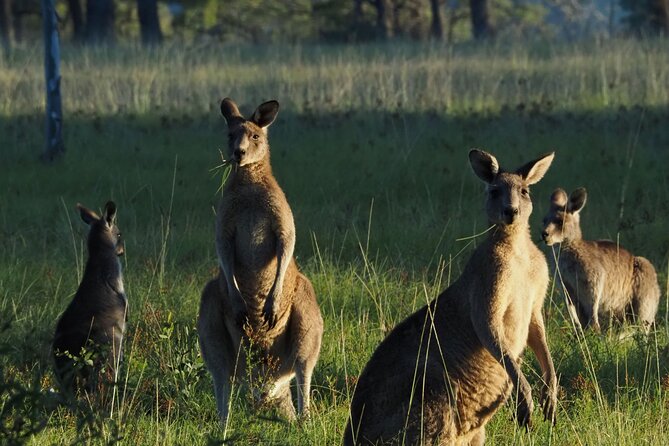
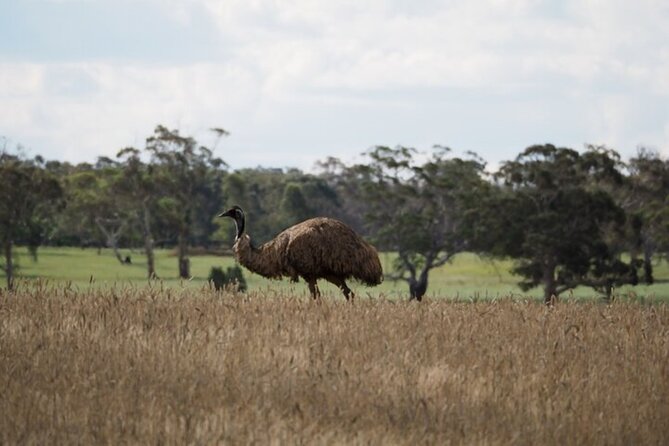
Kangaroos and wallabies are among the most likely large animals. Emus may also appear, adding a prehistoric touch to the open fields. Wombats are another major target, though they are not always easy to find during daylight. The guide may point out evidence of them before an actual sighting.
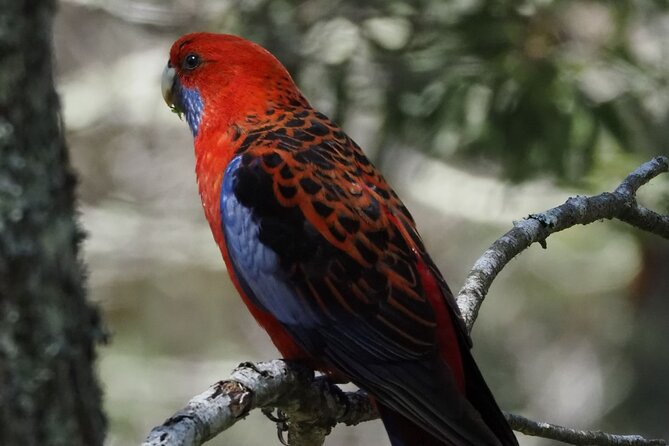
Birdwatching gives the afternoon extra depth. Kookaburras are easy to recognize by sound once you know what you are hearing. Parrots bring quick flashes of color, while other birds may require binoculars and patience. The supplied reference guides help you identify what you see instead of leaving every bird as simply a bird.
Past accounts of this outing describe more than 30 species seen in one day. That is not a promise, but it shows what the area can deliver when conditions are favorable and the guide reads the timing well. Steve is specifically praised for his sense of where and when to look, while Emma is noted for leading a very broad wildlife day.
Why the Great Western Wildlife Corridor matters
One of the more useful parts of the experience is the explanation of the Great Western Wildlife Corridor. This habitat link helps animals move between the southern Blue Mountains and Morton National Park.
For you, that means the tour has a conservation story tied to the places you are visiting. Roads, farms and development can break up animal habitat, making it harder for wildlife to move, feed and breed. A corridor helps preserve a connected route through the wider region.
You do not need a science background to appreciate this. The guide connects the idea to the animals around you. A kangaroo, wallaby or wombat needs more than one isolated patch of bush. Seeing the countryside in this wider context makes the afternoon more than a hunt for good photographs.
A few more Sydney half-days to weigh up
- Sydney: Opera House Guided Tour with Entrance Ticket
★ 4.8 · 8,312 reviews - From Sydney: Blue Mountains Full-Day Trip
★ 4.5 · 4,471 reviews - Sydney Opera House Official Guided Walking Tour
★ 4.5 · 3,770 reviews - Sydney: Big Bus Hop-On Hop-Off Tour with Optional Cruise
★ 4.4 · 2,697 reviews
The dusk wait for a wild platypus
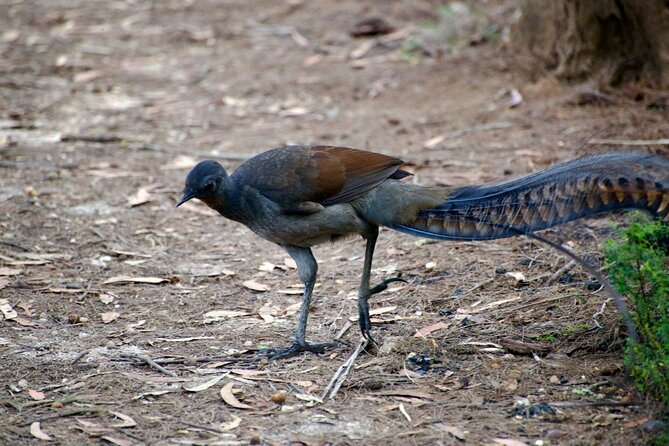
The river stop is the day’s most distinctive moment. At dusk, you visit a quiet river and search for platypus.
Platypus are shy, difficult to spot and not guaranteed. That uncertainty is part of the appeal, but it is also something you should understand before paying for the tour. You may spend time watching the water and seeing nothing more than ripples, reflections or movement that vanishes before you can identify it.
If one appears, the sight can be remarkable. This is a wild animal in its own setting, not an animal waiting behind glass. Keep your expectations calm and your attention sharp. The guide will direct your gaze and explain what to watch for.
The timing is well chosen. Dusk is when the river becomes more active, and the shift from daylight birdwatching to evening wildlife gives the trip a natural rhythm. Bring patience. The platypus search is not a quick photo stop.
Dinner at Australia’s oldest licensed inn
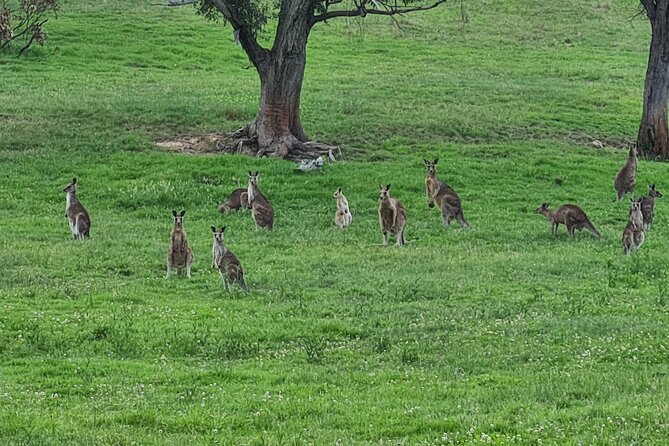
After the river, you stop for dinner at Australia’s oldest licensed inn. The meal is described as a classic country pub dinner and includes one alcoholic or non-alcoholic drink.
This is a welcome change of pace after walking and standing outdoors. It also gives you a chance to warm up, eat properly and compare the day’s sightings with the guide and the rest of the group.
The meal is part of the value of the tour, especially because the activity runs into the evening. You do not need to arrange a separate dinner in the Southern Highlands. Just keep in mind that this is a classic pub meal, not a fine-dining experience. The point is comfort, local atmosphere and a solid break before the final wildlife session.
The legal drinking age for alcohol is 18, and photo identification may be requested. A non-alcoholic drink is included for anyone who prefers not to drink.
Spotlighting wombats, possums and Tawny Frogmouths
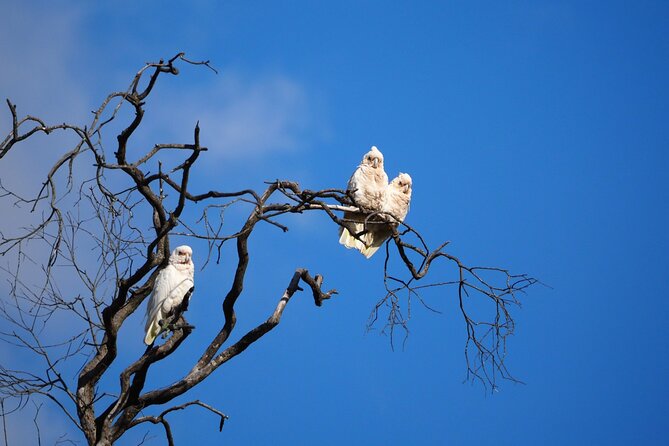
The final wildlife session takes place after dark. Using handheld spotlights, you search for wombats, possums and Tawny Frogmouths.
Night spotlighting changes how you experience the bush. During the day, birds and larger animals compete for your attention. At night, the beam of a spotlight narrows your focus. A pair of reflective eyes, a shape near the track or a bird perched low in a tree can become the high point of the evening.
Wombats and possums are among the main targets, but there is no guarantee that every animal will appear. The guide’s skill matters here, as does the group’s behavior. Quiet people who follow instructions give themselves the best chance of seeing something.
Tawny Frogmouths are especially worth watching for. They are nocturnal birds that can blend into branches, so finding one feels more like solving a small natural puzzle than spotting an obvious animal. The supplied wildlife guides help you make sense of these nighttime sightings.
What the $304.83 price includes
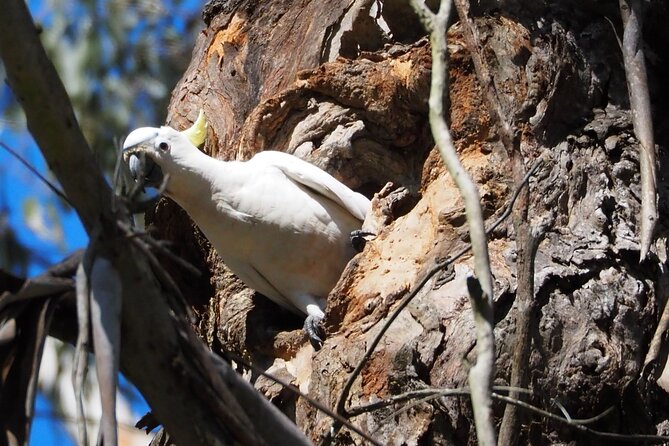
At $304.83 per person, this is not a cheap way to leave Sydney. The value depends on how much you want an informed, wildlife-focused day rather than a quick countryside excursion.
Your price covers:
- An experienced guide
- Air-conditioned transport from Sydney and back
- A light lunch
- A country pub dinner
- One alcoholic or non-alcoholic drink with dinner
- Binoculars
- Handheld spotlights
- Wildlife reference guides
The 10-hour duration also matters. You are paying for a full afternoon and evening, not a short animal encounter. The transport alone covers the return trip between Sydney and the Southern Highlands, while the guide provides the planning and local access that would be difficult to arrange on your own.
The small group helps justify the cost. With no more than eight people, the day should feel more personal than a large coach outing. You have a better chance to ask questions, get help with identification and see through the binoculars when the guide finds something.
I would consider this good value for someone who places wildlife above sightseeing landmarks. If your main goal is simply to see a kangaroo, you can find easier and less costly options around Australia. This experience earns its price through variety, specialist guiding, private country access, the platypus search and the evening spotlighting.
Walking, clothing and practical limits
You need moderate physical fitness. The walking includes stretches of about 1 kilometre, and some paths can be steep, rough or slippery. River banks may also be uneven.
Wear closed-toe shoes with a firm grip. Comfortable clothing is essential, and checking the Southern Highlands weather forecast on the day is sensible. Conditions can differ from central Sydney, so do not rely only on the forecast for the city.
This activity is not recommended if you have limited mobility. The combination of walking, rough trails, river edges and nighttime conditions makes it a poor match for anyone who needs flat, even surfaces.
The mobile ticket is convenient, and confirmation arrives when you book. The meeting point is near public transportation, though the provided details identify the Sydney Harbour Marriott Hotel as the exact start and finish point.
Who will enjoy this wildlife day most?
I would choose this outing if you are keen on Australian animals and want to see them in open country. It suits photographers, birdwatchers, couples and small groups who enjoy patient observation more than fast sightseeing.
It is also a good fit if you have already explored Sydney’s major sights and want a very different day. The shift from city streets to farms, bushland, river and pub gives you a stronger sense of the region south of Sydney.
Families should consider the long duration and the walking conditions carefully. Young children may find the quiet waiting periods hard, though the maximum age details provided do not set a general minimum age for the activity. Alcohol rules apply only to those ordering the alcoholic drink.
This is not the right choice if you need a guaranteed platypus sighting, dislike uneven trails or want a short, highly predictable excursion. Wildlife keeps its own schedule.
Booking timing and cancellation risk
The experience is commonly booked about 32 days ahead, so advance planning makes sense, especially if your Sydney schedule is tight. The group is small, and wildlife days can have limited departures.
The booking is non-refundable and cannot be changed for any reason. If poor weather cancels the activity, you are offered another date or a full refund. The same applies if the minimum number of participants is not reached, with the option of another date or experience.
That policy makes travel insurance worth considering if your plans are uncertain. It also means you should check your schedule, meeting point and weather before committing.
Should you book the Sydney Wildlife Safari?
Book it if you want a serious day of wildlife watching, not a quick animal photo stop. The strongest reasons are the small group, broad mix of species, private rural access, the river search for platypus and the night session for wombats, possums and Tawny Frogmouths.
The main caution is simple: this is a long, active outing with wild animals and no guarantees. At $304.83, it makes the most sense for you if seeing Australian wildlife in natural surroundings is one of the main goals of your visit. If that sounds like your kind of day, the combination of skilled guiding, useful equipment, meals and varied habitats gives you plenty in return.
FAQ
Where does the Sydney Wildlife Safari start?
It starts at the Sydney Harbour Marriott Hotel at Circular Quay, 30 Pitt Street, Sydney NSW 2000.
What time does the tour begin?
The scheduled start time is 12:00 pm.
Where does the tour finish?
The activity ends back at the Sydney Harbour Marriott Hotel meeting point.
How long does the experience last?
The listed duration is approximately 10 hours.
How far is the Southern Highlands from Sydney?
The drive from Sydney to Bowral takes about 90 minutes.
What animals might I see?
Possible sightings include kangaroos, wallabies, wombats, emus, possums, kookaburras, parrots, Tawny Frogmouths and wild platypus.
Is a platypus sighting guaranteed?
No. The group searches for wild platypus at dusk, but sightings depend on conditions and luck.
What meals are included?
A light lunch, such as gourmet wraps, is included. Dinner is a classic country pub meal with one alcoholic or non-alcoholic drink.
What should I wear?
Wear closed-toe shoes and comfortable clothing suitable for walking. Check the Southern Highlands weather forecast before departure.
How many people can join the tour?
The maximum group size is eight people.
Is the activity suitable for people with limited mobility?
No. It is not recommended for people with limited mobility because the route includes steep, rough and sometimes slippery trails and river banks.
What happens if bad weather cancels the experience?
You are offered a different date or a full refund if poor weather causes the cancellation.
Can I cancel for a refund?
No. The experience is non-refundable and cannot be changed for any reason, except when the operator cancels because of poor weather or an insufficient minimum group size.
Just added around Sydney
- Sydney Eye Tower Admission Ticket★ 3.5 · 3 reviews
- Guided Snorkel Tour at Australias most iconic beach★ 5.0 · 3 reviews
- Uncover the Magic Gin Distillery Adventure at Millsheds Bowral★ 4.5 · 3 reviews
- Sydney Beaches Half Day Drive and Walk Tour★ 5.0 · 3 reviews
- Sunrise & Surf Beach Lifestyle Photoshoot★ 5.0 · 3 reviews
- Honey Farm Tour. Morning Tea. Guided Tasting★ 5.0 · 3 reviews
- Small Group Tour Sydney City Highlights and Hidden Gems★ 5.0 · 3 reviews
- Tour from Eden to Merimbula Wetlands Wildlife and Coastline★ 5.0 · 3 reviews
Wildlife & Zoo Experiences, compared.
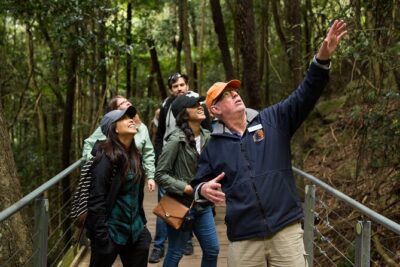
All Inclusive Blue Mountain,Scenic World,Lunch,Koalas,ferry
Read our review →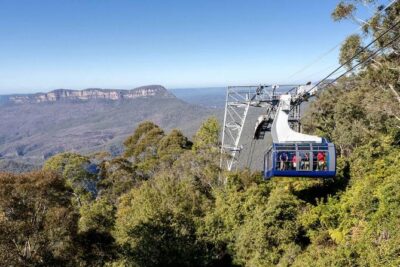
Blue Mountains Small-Group Tour from Sydney with Scenic World,Sydney Zoo & Ferry
Read our review →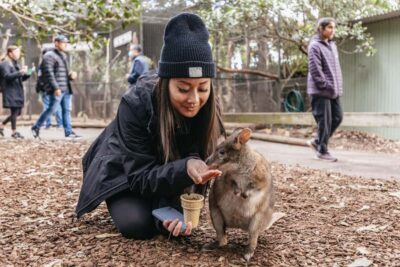
Blue Mountain Small Group Scenic World, Wildlife, Waterfall
Read our review →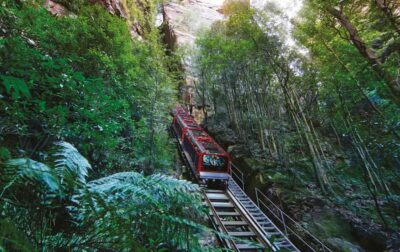
Blue Mountains Adventure: Scenic World, Zoo & Koala Photo
Read our review →
Three Sisters, Scenic World and Wildlife park
Read our review →
Exclusive Blue Mountains Wildlife and Bushwalk Tour From Sydney
Read our review →
Browse the lists this tour appears in